Luxury Cabins vs Pods: How to Maximise Your UK Holiday Let Income
We help landowners and homeowners build eco-homes, extend their homes, and create unique holiday homes that gain planning permission and pay them back. RIBA Chartered Architects.
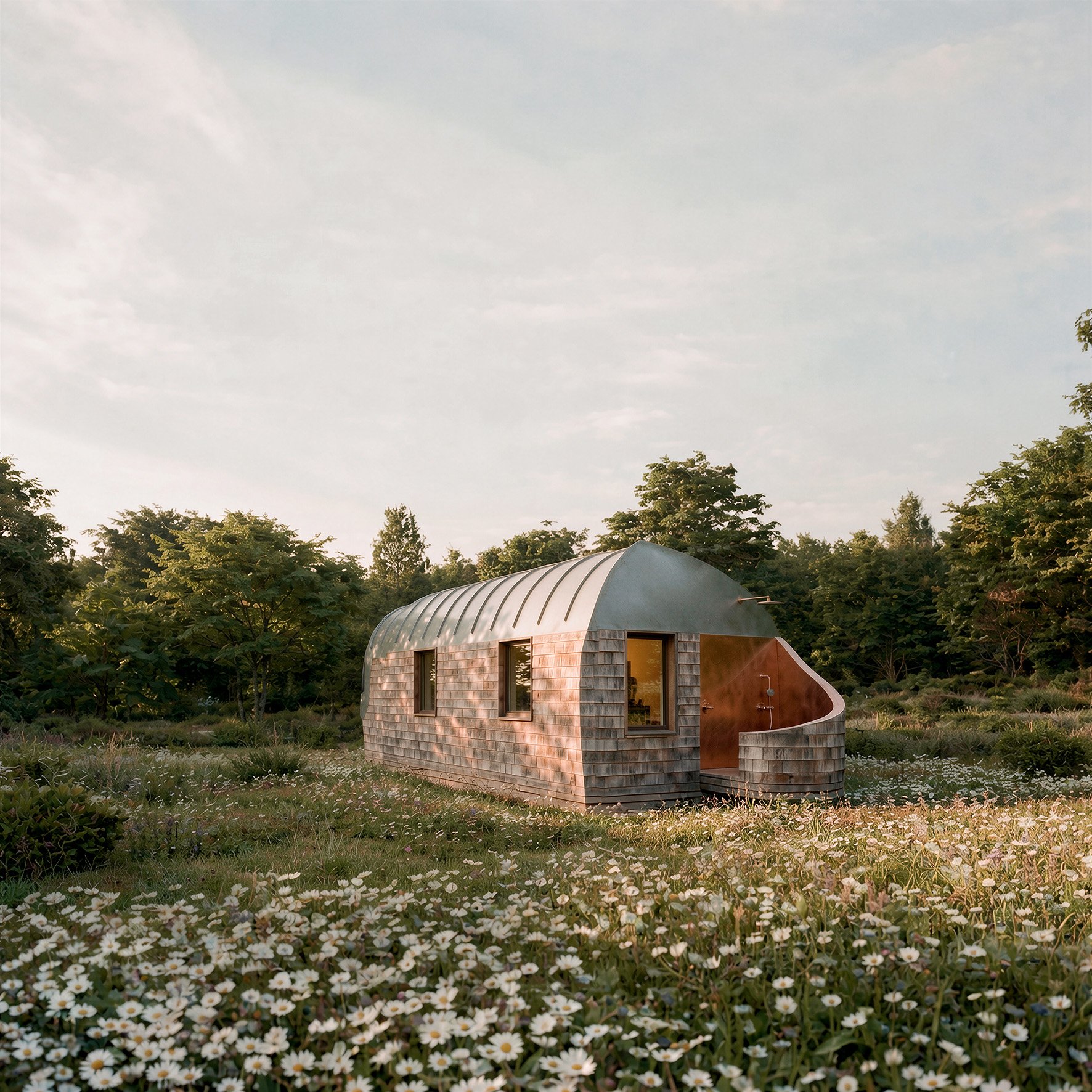
Our Monocoque Cabin II is positioned around Ross-on-Wye within a medow. The structure is designed to last a lifetime and is built using high-quality materials, such as zinc for the roofing and grade 1 cedar shingles for the cladding. The shower is also made from a patented copper lining.
Why Your Choice of Cabin Matters More Than You Think
If you’re planning a UK holiday let, you’ve probably looked at the usual options: shepherd’s huts, pods, and prefabs. They do a certain job, and in the right setting, they can perform reasonably well.
But the market has shifted.
Holidaymakers are becoming far more selective. The UK is saturated with decent-but-generic stays, and guests now expect something that feels thoughtful, crafted, and rooted in its setting. If your cabin doesn’t stand out, it simply blends into the noise.
And when a stay feels interchangeable with the next one, guests don’t feel the need to book your property.
What Guests Really Value in a Holiday Cabin
If your land carries something special, a lake that holds the morning light, a clearing in mature woodland, a long view over open countryside, then the cabin needs to rise to the occasion.
Good design notices these moments. It places a deck exactly where the evening sun falls. Frames views as though they were composed. Sits comfortably in the landscape rather than being dropped onto it.
These subtleties matter. They’re what guests remember. They’re what guests pay more for. And they are the difference between “modest side income” and “fully booked, year-round business.”
Luxury Cabins vs Pods: Which Performs Better?
Luxury Architect-Designed Cabins — Higher Rates, Higher Demand
Most pods and off-the-shelf units are generic by nature. They’re designed around convenience and low upfront cost, rather than longevity, material quality, or guest experience. As a result, many simply don’t stand the test of time.
Architect-designed cabins, whether one-off or part of a repeatable system, take a different approach. Good design is adaptable, but it is the quality of construction, detailing, and materials that ultimately sets these cabins apart. A well-designed and well-built cabin can be placed, oriented and finished to make the most of:
the orientation of the sun
the lie of the land
the hierarchy of views
privacy and approach
the guest experience from the moment they arrive
It isn’t the repeatability that matters; it’s the design intent and build quality.
A well-made cabin, constructed with durable materials and thoughtful detailing, will always outperform a generic product.
Better design and better construction create better stays, and better stays directly increase occupancy, nightly rates, and long-term value.
This is why the highest-performing holiday lets tend to be architect-led, even when the unit itself is repeatable.
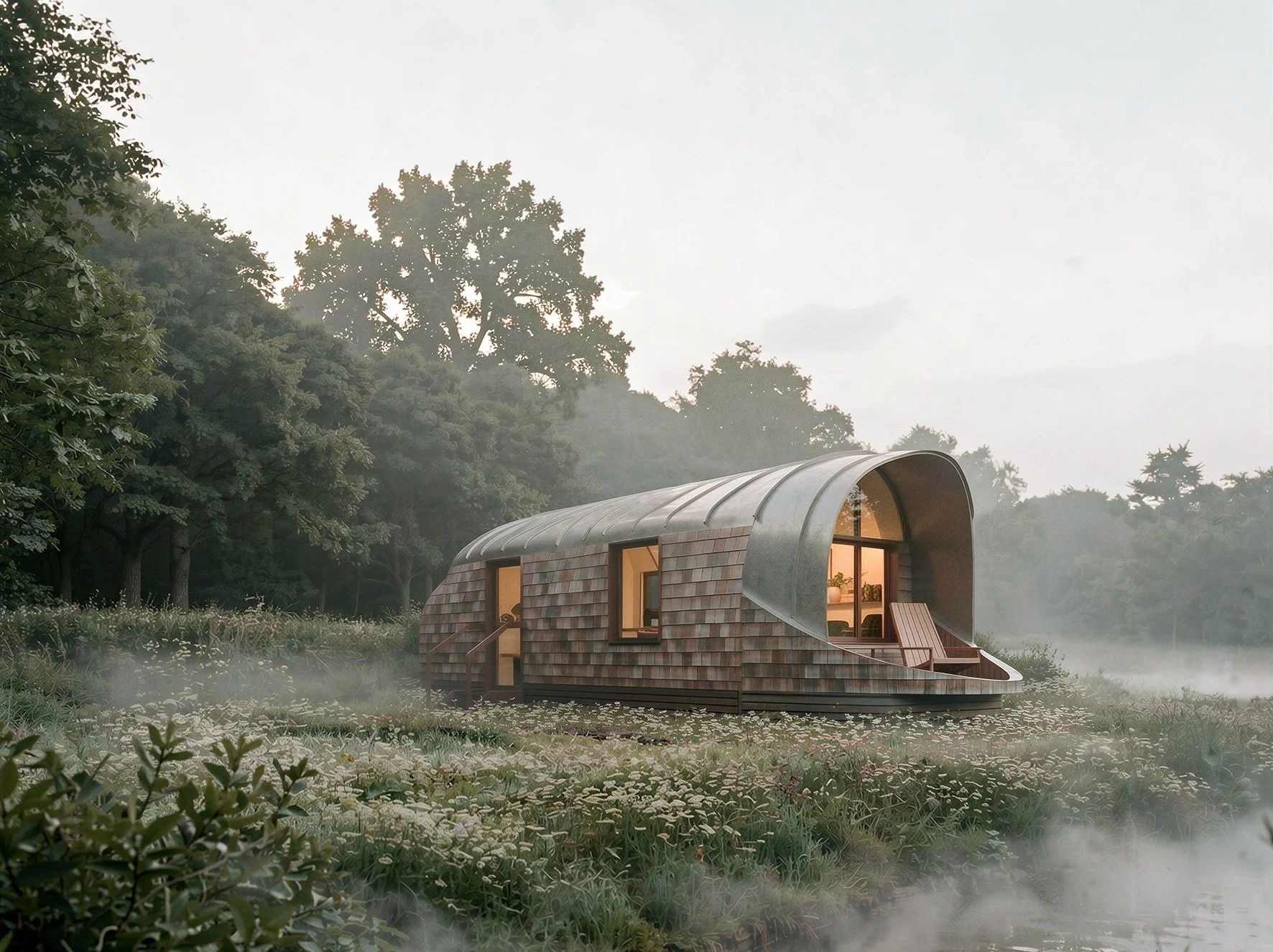
Monocoque II at dawn — the open end of the shell faces the water, the deck extending the living space outward into the mist. Sited, not placed.
When a Luxury Cabin Is Worth It
Making the most of unique sites and landscapes
Today’s guests are searching for unique, design-led spaces that stand out on Airbnb and Booking.com. We are also seeing a big increase in niche booking sites, such as Coolstays and Cannopy & Stars, demonstrating a growing demand for niche properties. These direct booking sites only take on properties that are luxury and unique—the ones they’re proud to post on Instagram.
Why design-led cabins outperform generic units
A well-designed cabin consistently outperforms a generic unit in both nightly rate and occupancy. Guests will pay more, and book more often, for a space that feels unique, considered, and worth talking about.

Comparison of potential annual income between a generic hut and a luxury architect-designed cabin, showing how higher nightly rates and occupancy can significantly boost returns.
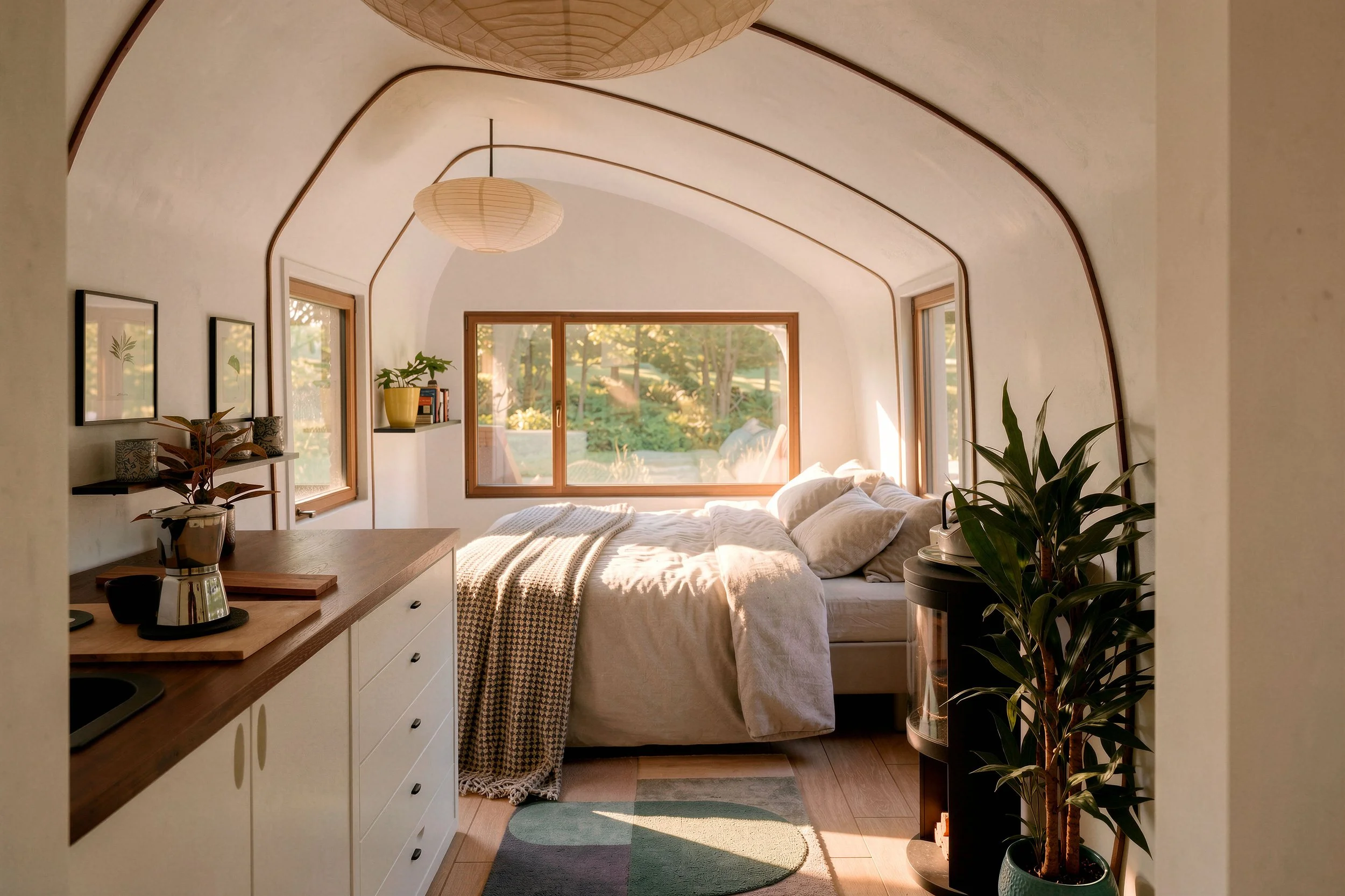
Monocoque II interior — the curved laminated timber shell defines the ceiling and walls, with walnut cabinetry, oak flooring, and timber-framed glazing to the meadow beyond. Every element is designed to the curve; nothing is imposed on it.
Maximising Rental Yield and Long-Term Value
The Hidden Cost of Cheap Cabins
One of the biggest misconceptions is that the main value lies in rental income alone.
In reality, the real money is made when you sell the asset or the business.
This is where pods fall apart:
Many aren’t built to Building Regulations standards
Cheaper materials wear quickly
Structural warranties are often missing
Lifespan can be as short as 5–15 years
Resale value is low to nonexistent
This is why so many off-the-shelf cabins depreciate rapidly and become financial dead ends.
What Happens When You Build It Properly
A well-designed, properly constructed cabin:
lasts 50–100 years
obtains full planning approval
meets Building Regulations
carries a proper structural warranty
retains value as a sellable business
Built using high-quality materials
How Much Will a Luxury Cabin Cost to Build?
A luxury cabin will always cost more than a pod — but the spread varies.
A typical one-bedroom cabin of 15–25m² will sit somewhere between £52,000 and £123,000, depending on:
specification
glazing
material quality
structural system
off-grid requirements
landscape integration
The best comparison is a kitchen: same footprint, wildly different price brackets based on choices.
Case Study: Monocoque Cabin
A bit of background. Alongside running my architecture practice, I also set up a holiday let business. From the very beginning, I leaned into design as the thing that would set it apart.
Back in 2022, I was lucky enough to be one of 100 winners of the Airbnb OMG! Fund, $100,000 to build and let a unique cabin. Airbnb weren’t doing this out of generosity; they knew their platform needed more stand-out places, not just another row of pods. It showed me just how much value they place on originality and strong design.
When I started, I was 25, with very little business understanding. What I did have was the conviction not to cut corners on the design or the build. That decision paid off. A few years in, my accountant pointed out something I hadn’t really considered: the real value in the business isn’t just the income it brings in each night, but the resale value of a well-designed, properly built cabin business. That’s exactly what the Monocoque Cabin became, not just a rental, but a long-term asset.
Summary: Choosing the Right Cabin for Your Airbnb Business
Choosing the right cabin and product should not be about opting for the cheapest option today. It should be based on careful consideration of what will hold its value and sell as a sustainable business in the future. If your site has real character, a unique cabin can turn it into a destination that commands higher rates, stronger resale value, and a lasting reputation.