
We help landowners and homeowners build eco-homes, extend their homes, and create unique holiday homes that gain planning permission and pay them back. RIBA Chartered Architects.
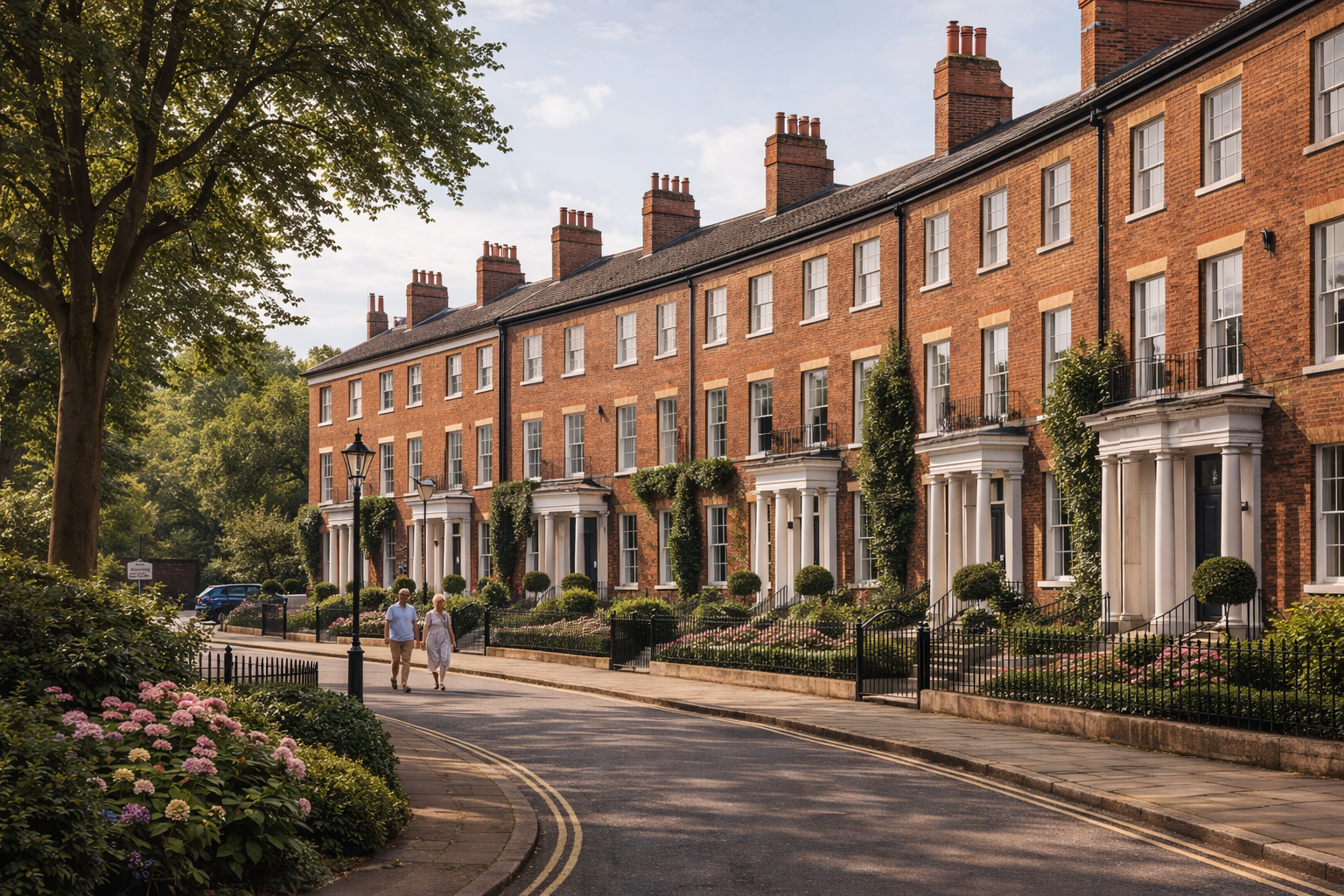
Cedar Scape is a two-storey rear extension to a Georgian terrace in Edgbaston, Birmingham, currently in planning. The clients had lived in the house for fifteen years. The kitchen had never worked, was cramped whenever anyone came round, and the back of the house had no relationship with the garden. A builder had quoted £223,000 for a full-width rear extension, a front extension, and a loft conversion. Three projects, three sources of disruption, and a scheme that would have damaged a beautiful house in the process of trying to fix it.
A smaller, better-placed scheme
The decision was to do less, in the right place, rather than more, everywhere. The front extension and the loft conversion were taken out of scope. The remaining proposal is a single, well-resolved two-storey rear extension that solves the brief: more space, more light, a proper kitchen-dining-living connection to the garden, and a first-floor addition that supports the upstairs accommodation. The scheme came in at under £127,000. A saving of around £100,000, with a house that works better than the larger version would have.
The principle is straightforward. The kitchen was the failure, not the plan. Fix the kitchen and the relationship to the garden, and most of the rest of the house starts working again. A front extension on a Georgian terrace would have weakened the street elevation; a loft conversion would have introduced disruption disproportionate to the gain. Identifying which intervention is doing the work, and which interventions are just spending money, is what pre-design is for.
Cedar Scape - Contemporary Extension, Edgbaston

Before You Spend £100,000 on Your Home… Read This First.
Designed in two registers
The lower level is a glazed pavilion with full-height sliding doors across the rear elevation, pulling the kitchen-dining space into the garden. The upper level is a clad volume in vertical cedar timber, with composed openings. Solid above, more permeable and open below.
The split does the work. Privacy at the first-floor level, where a glazed wall would have caused overlooking issues with neighbours. A clear architectural composition rather than a continuous glass box. And a contemporary contrast with the Georgian host that reads as deliberate.
Materials chosen to sit in a Conservation Area
The extension sits within the Edgbaston Conservation Area, which makes the planning argument as much about character as scale. Vertical timber cladding calibrated to weather into the existing terrace palette. Slim-profile aluminium glazing, detailed to read as restrained. A flat roof set below the eaves of the host so the extension defers rather than competes.
Conservation Area extensions fail when they try to imitate. They earn permission when they sit alongside the host honestly.
Working with the Conservation Area
The footprint stays within the existing rear plot. Materials and proportions are read against the character appraisal for the area. The new elevation is contemporary in language but proportionate in scale, and the street elevation is left untouched. Pre-application engagement and a contextual design rationale support the submission.
The argument made at planning is the same one made to the client. A smaller, better-placed scheme is not a compromise; it is the version that respects the house and the Conservation Area while meeting the clients’ needs.
