

We help landowners and homeowners build eco-homes, extend their homes, and create unique holiday homes that gain planning permission and pay them back. RIBA Chartered Architects.
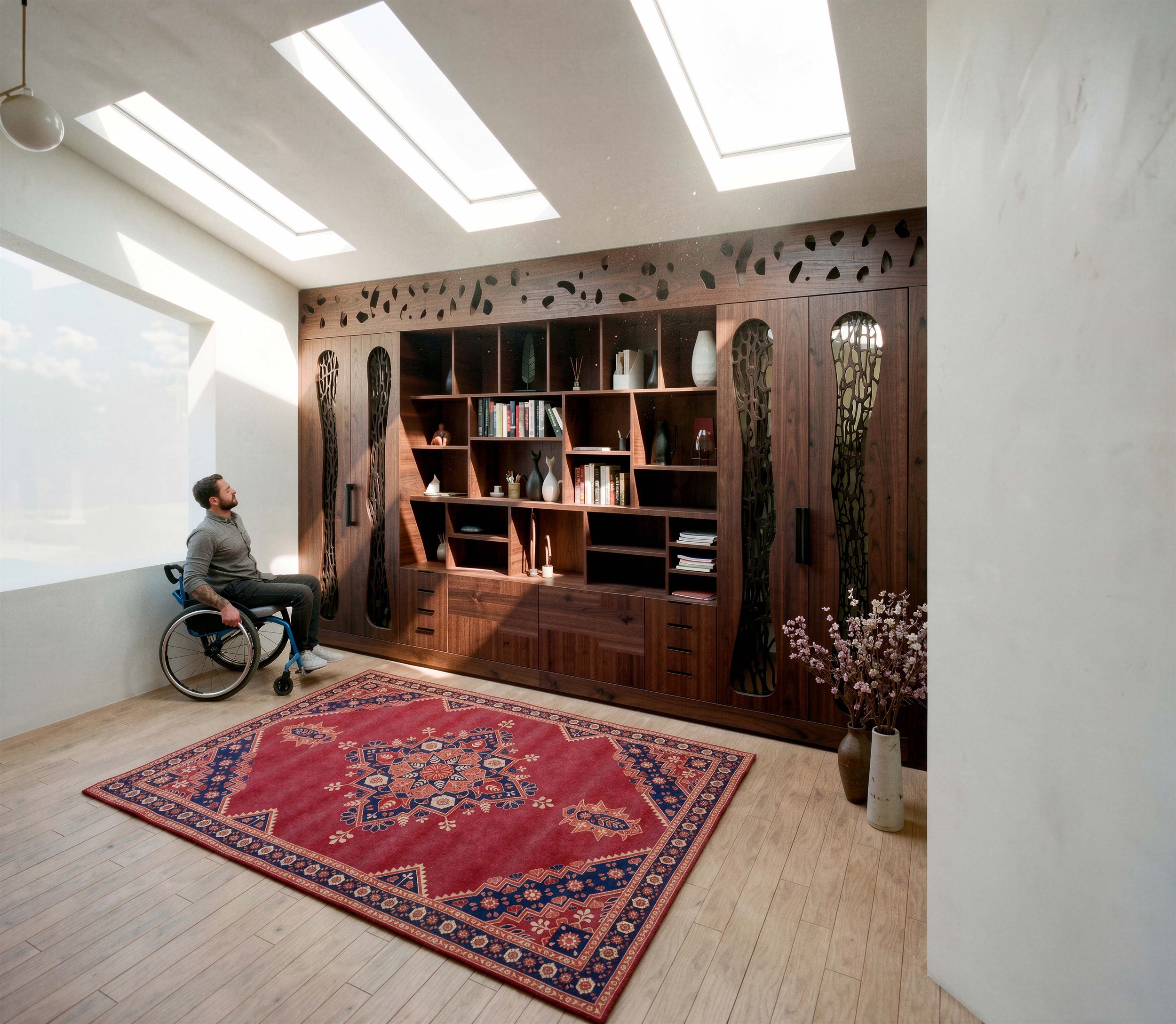
The Coventry Cabinet — Bespoke Embedded Joinery for Accessible Living
The Coventry Cabinet is a custom CNC-machined storage wall designed for a wheelchair-using client in Coventry, as part of a wider accessibility adaptation to the family home. The project was built on the principle of "beautifying the home." Because the client's motor neurone disease means he is rarely able to leave the house, the beauty of the home became critical.
The client had a fascination with the ornament found in mashrabiyas, the carved timber screens of Ottoman homes in cities such as Cairo. As my own family heritage is from Cairo, this was a natural alignment. We were keen to work with him so that the historic reference was not pastiche, but instead built into the cabinet's structure and critical to how it functions.
Designed for Two Heights
Most shelving is designed for an able-bodied person in the 50th percentile. The challenge here was that the cabinet had to fit around the client's changing needs while also working for his brother, who is six foot five, and his full-time carer, who needed full access to the same storage. Frequently used items sit in the cabinet's central band, within a seated reach. LED lighting washes down from above, turning the whole cabinet into a light source on darker evenings, in effect an evening light for the room.
We did not want the cabinet, or any of the interior design in the home, to feel as though it had been designed for someone who needs accessible spaces. Accessible design is at its worst when it segregates — a design language with little care for aesthetics, excessively flat and clinical.
Experiencing the Space
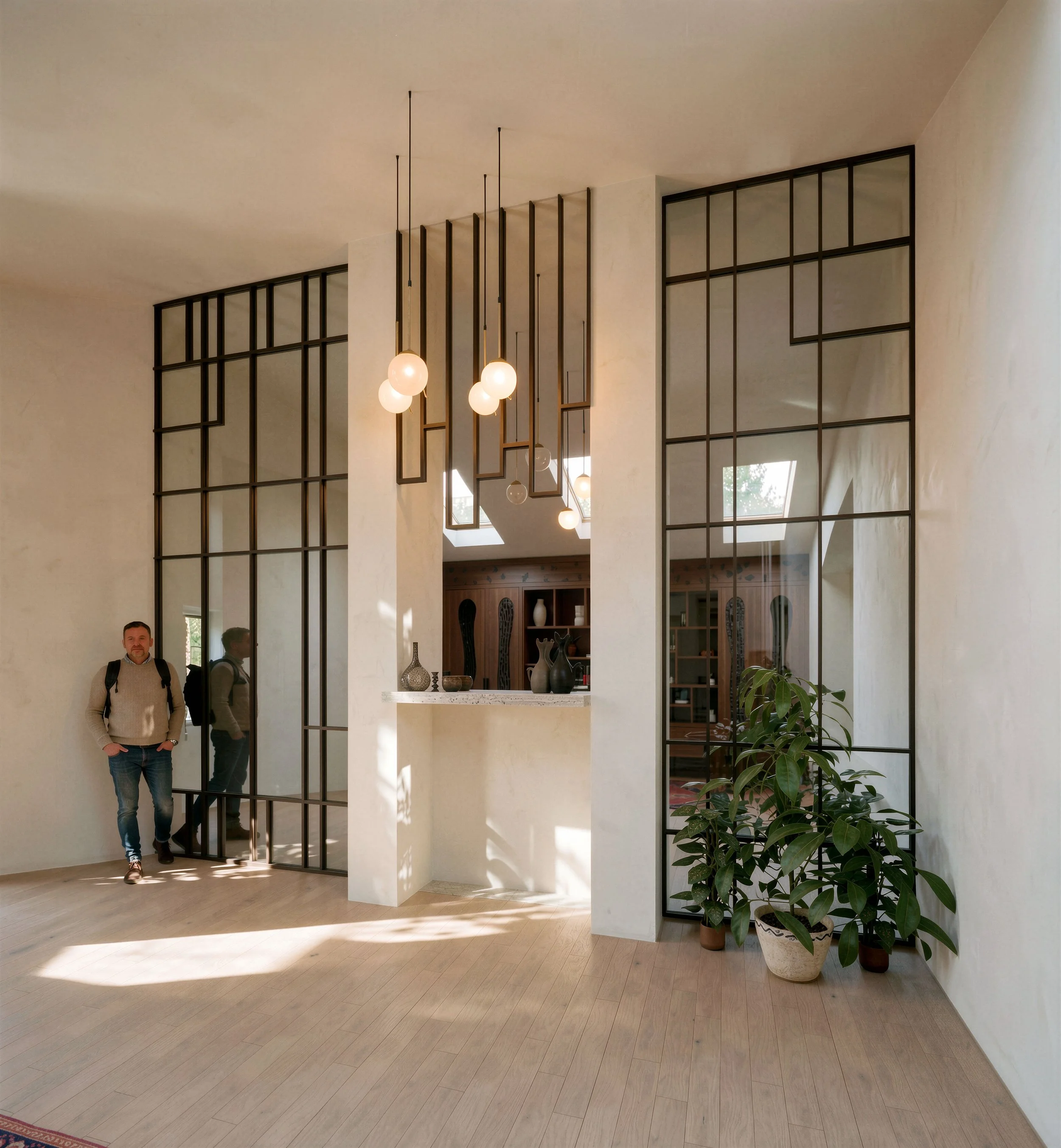
The furniture is designed to beautify the main entrance and the space around it. Opposite the cabinet, a large mirrored wall is built around the existing fireplace. The mirrors are critical: they give the space a sense of grandeur and make it feel larger than it is. In many ways, it draws on the Hall of Mirrors at Versailles, albeit not quite as grand, where mirrors open up the function of a room. Here they become an alternative way of seeing and experiencing the cabinet.
Materials and Making
The cabinet was designed to last a lifetime, so the highest-quality woods were used throughout. The entire unit was manufactured off-site using CNC machining. This mattered for two reasons. It allowed far greater precision in both the making and the cost calculations, and it meant less disruption for the client, since off-site manufacture keeps on-site work to a minimum.
Walnut plywood for the carcass and the visible interior. Walnut veneer for the face panels, selected for grain continuity across the elevation. Powder-coated steel for the fretwork backing and the handles, in a tone that holds against the walnut without competing.
Part of a wider adaptation
The cabinet is one element of a broader accessibility project to the home, addressing circulation, thresholds, kitchen layout, and bathroom adaptation. The decision to make the storage wall the architectural centrepiece of the room came from the client directly. The brief included a clear position: the home should be beautiful as well as functional, and beautiful things bring joy independent of their utility. Accessibility adaptations are too often delivered as the absence of beauty.
Before You Spend £100,000 on Your Home… Read This First.

