Do Eco Upgrades Increase Holiday Let Profit?
We help landowners and homeowners build eco-homes, extend their homes, and create unique holiday homes that gain planning permission and pay them back. RIBA Chartered Architects.
If you have an existing holiday home, there are several relatively straightforward steps you can take to enhance the eco-credentials of the space and make it more appealing to prospective guests.
It’s important to be clear that the more eco-friendly a property is, the more likely it is to “differentiate itself” from competitors, particularly on sites like Airbnb in the market. In practice, this typically translates to higher occupancy rates, stronger bookings, and ultimately, higher income.
For a bit of background, we’re a RIBA Chartered Architect practice, and the purpose of this article is to focus specifically on eco-friendly tips related to design and construction, rather than day-to-day operational changes.
1. Embrace natural lighting
One of the highest ongoing costs in operating a holiday let is energy, particularly the cost of heating a property. Improving natural lighting can play a meaningful role here. Done properly, it can help increase passive solar gain, improve perceived warmth, and dramatically enhance the quality of the internal environment.
Quite simply, a bright, well-lit space feels better to be in than a dark or dim one.
This becomes particularly relevant because there’s often a temptation to extend a building or increase floor area when, in reality, what may be needed is simply better quality light. Improving daylight can turn what are otherwise dead spaces into spaces that are far more useful.
Depending on the specifics of your property, there are several reasons why natural light might currently be limited. In older properties, for example, mature planting is often a factor. Trees can block valuable daylight, particularly in winter when light levels are already lower.
Of course, it would be contradictory to talk about sustainability while indiscriminately cutting down healthy trees. However, selective pruning can often make a significant difference without undermining the landscape. In some cases, removal may be justified, particularly where trees are of low quality or inappropriate species. Fir trees, for example, are evergreen and can significantly darken a building throughout the year.
We have a holiday home, for instance, that is surrounded by a large number of trees. Some of these include firs, which, as mentioned, are relatively low quality in ecological terms and have a noticeable impact on daylight.
Another option is to alter the building fabric itself. Introducing rooflights, enlarging window openings, or adding floor-to-ceiling glazing in the right locations can transform the internal atmosphere of a space. These kinds of changes often deliver far greater value than they appear to on paper.
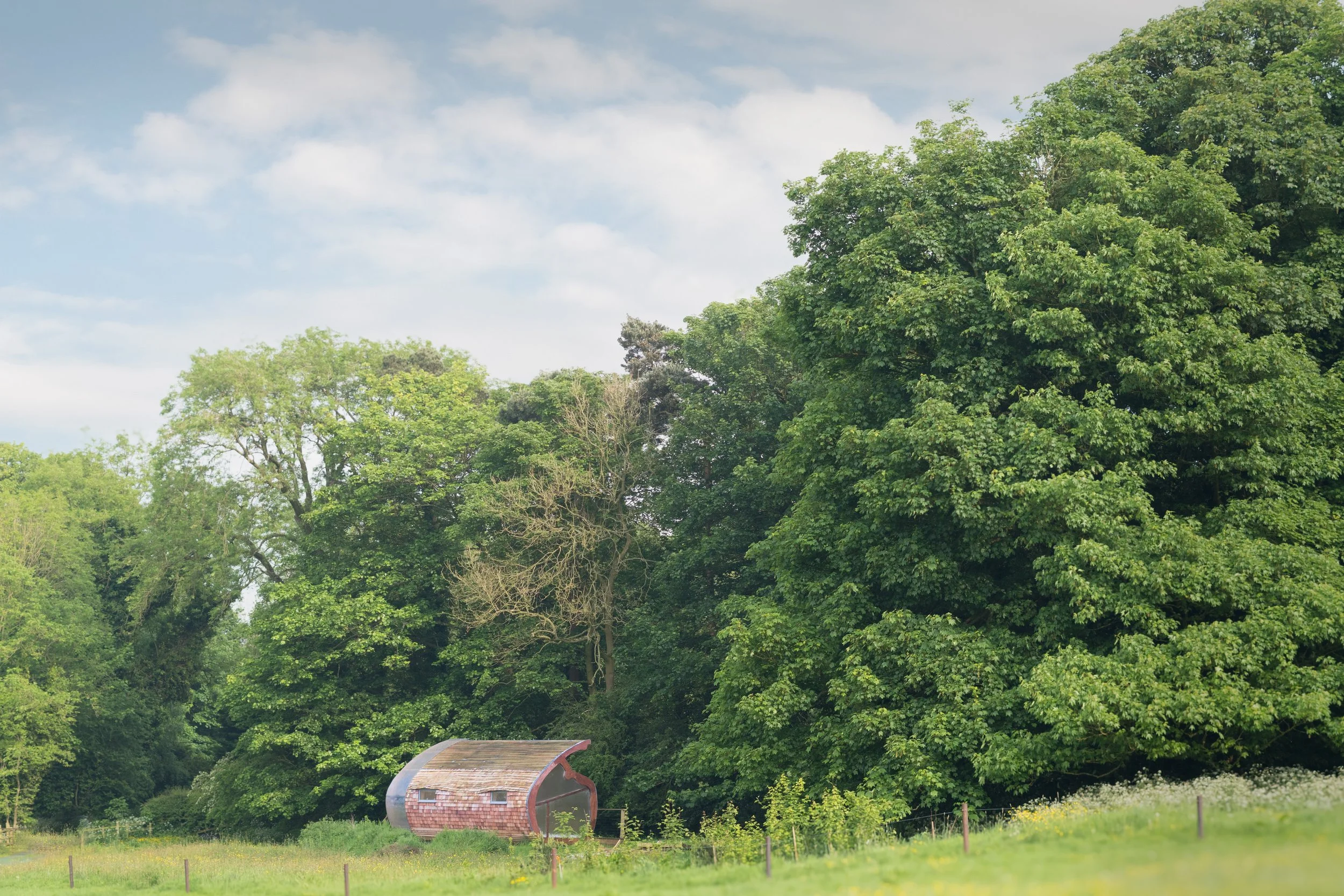
At one of our own holiday lets, selective tree pruning was used to improve natural daylight. This had a noticeable impact on internal comfort and helped increase passive solar gain and thermal performance.
2. Increase insulation
Depending on your construction type, it may be worth improving the level of insulation within the property. This can be achieved in several ways, many of which will depend on the specifics of the building.
The first, and perhaps easiest, step is to address draughts. This often means sealing gaps in the external envelope, for example, around window and door openings. In some cases, windows may not have been particularly well fitted into the building fabric originally, which can result in unnecessary heat loss.
Another highly effective measure is adding or upgrading loft insulation. This is often one of the most cost-effective improvements you can make, with long-term benefits. Heat naturally rises, so insulating the roof space significantly reduces heat loss. It’s relatively simple to do and, as mentioned, very effective.
Internal and external wall insulation can also be effective, but they are not always the right solution. For example, if you have a characterful or period property, wrapping the building in external insulation boards is often inappropriate from both an aesthetic and heritage perspective.
Similarly, with smaller properties, internal wall insulation can reduce the usable floor area to the point where it compromises the quality of the space. In some cases, this trade-off isn’t worth it.
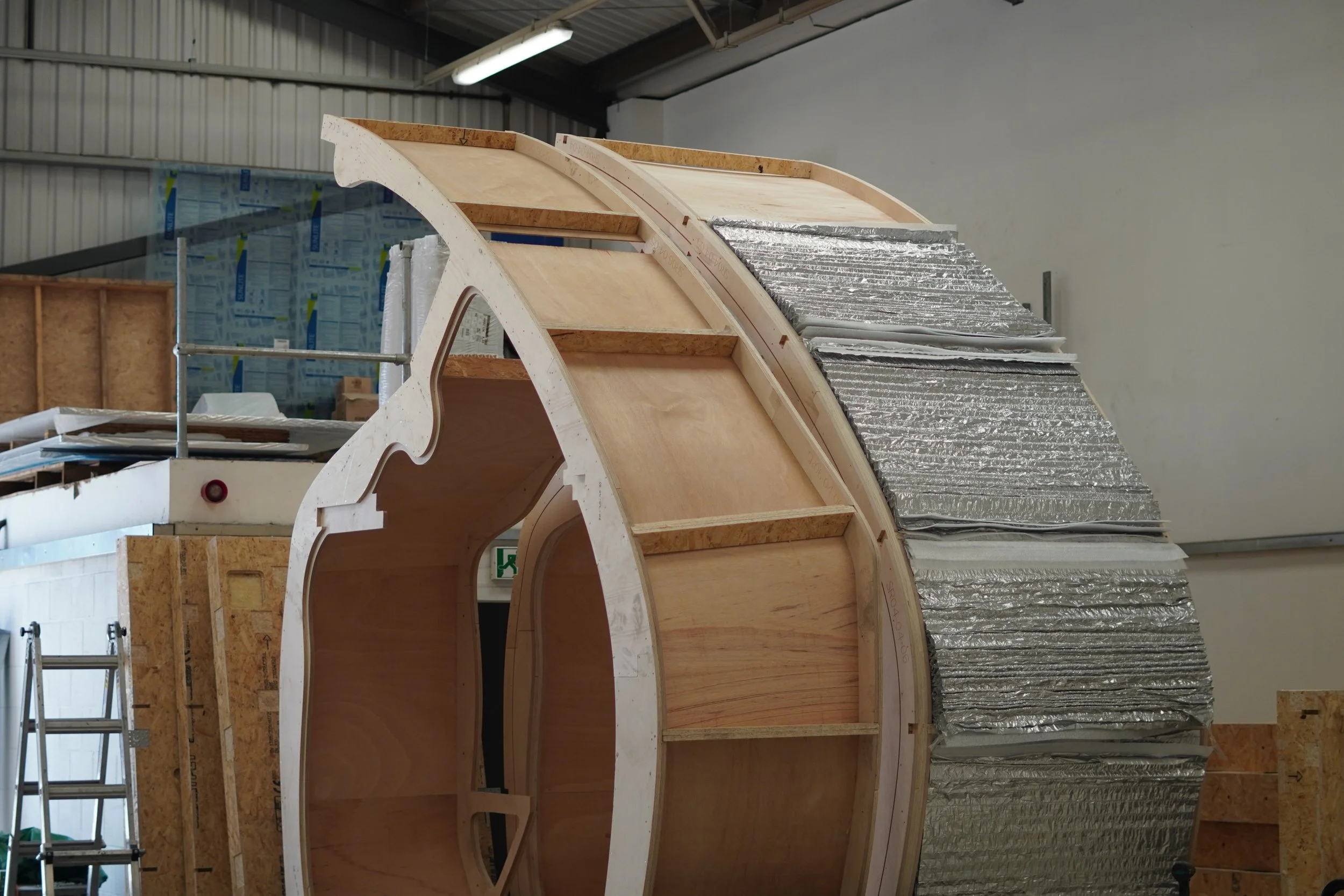
Upgrading insulation within the building envelope can significantly reduce heat loss, but the right approach depends on the construction type, available space, and overall impact on the quality of the interior.
3. Sustainable internal finishes
This is an area where there has been a noticeable and positive shift in recent years. More people are now comfortable buying furniture through platforms such as Facebook Marketplace or eBay, and there’s a growing appreciation for well-made second-hand pieces, particularly mid-century furniture.
These items are typically built to last and are often made from solid natural materials such as oak or other hardwoods. They can be repaired, sanded back, refinished, and adapted over time.
By comparison, many manufactured board products, MDF being the obvious example, tend to age poorly. After four or five years, they often begin to look tired, damaged, or dated, and they are far less forgiving when it comes to repair. Obviously, not ideal when you are running a holiday home.
4. Use natural materials when altering your property
Closely related to the point above, natural materials tend to age far more gracefully. Timber, stone, and other natural finishes develop character over time rather than simply wearing out.
One of the advantages here is cost. Many natural materials can be sourced affordably through reuse and salvage, again via platforms such as Facebook Marketplace or specialist suppliers like decking and reclaimed timber merchants. This not only reduces waste but often results in a more robust and visually rich interior.
5. Consider renewable energy options
Renewable energy systems are also an important consideration. Technologies such as solar panels or heat pumps can significantly reduce the operational carbon footprint of a holiday home.
There is also a range of government incentives and grants available, which can improve viability. That said, whether these systems are appropriate will depend on the payback period, installation costs, and how the property is used. In some cases, they make clear financial and environmental sense; in others, they may be better considered as part of a longer-term strategy.
A holistic approach works best
All of these measures are most effective when they’re considered holistically, as part of a clear and well-defined strategy, rather than implemented in isolation or with a scattergun approach.
When these improvements are planned together, lighting, insulation, materials, and energy use tend to reinforce one another. That’s where you see the best results. It does take thought and a bit of upfront strategy, but when done well, the outcome is a holiday let that operates more sustainably, is genuinely better for the environment, and feels noticeably nicer to be in.
There’s plenty to feel good about there. But just as importantly, these improvements usually result in a more robust and profitable business over the long term.
Need help knowing where to start?
If you’re reading this and thinking that it all sounds worthwhile, but also a little overwhelming, that’s completely understandable. In reality, it is complex, particularly when you’re trying to balance cost, planning constraints, sustainability, and long-term value.
We’re a RIBA-chartered architecture practice, and this is exactly the kind of work we help clients with. We work closely with owners to improve the sustainability, liveability, and overall quality of holiday homes, taking a considered and pragmatic approach throughout.
If you’d like to explore how this could apply to your own property, you can use the link below to book a direct call with me.