We help landowners and homeowners build eco-homes, extend their homes, and create unique holiday homes that gain planning permission and pay them back. RIBA Chartered Architects.
Canopy Cabins — Architect-Designed Treehouse Retreat
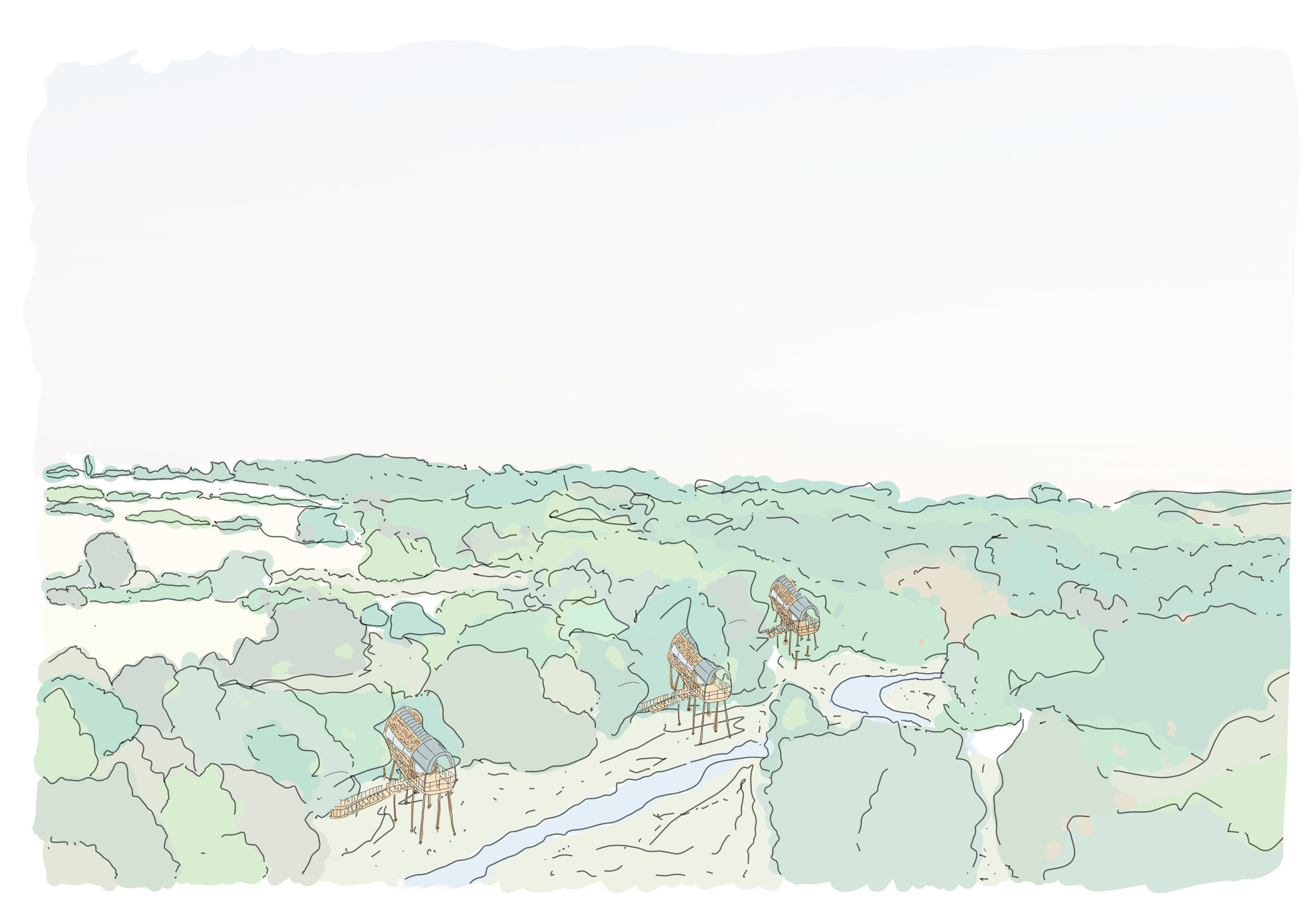
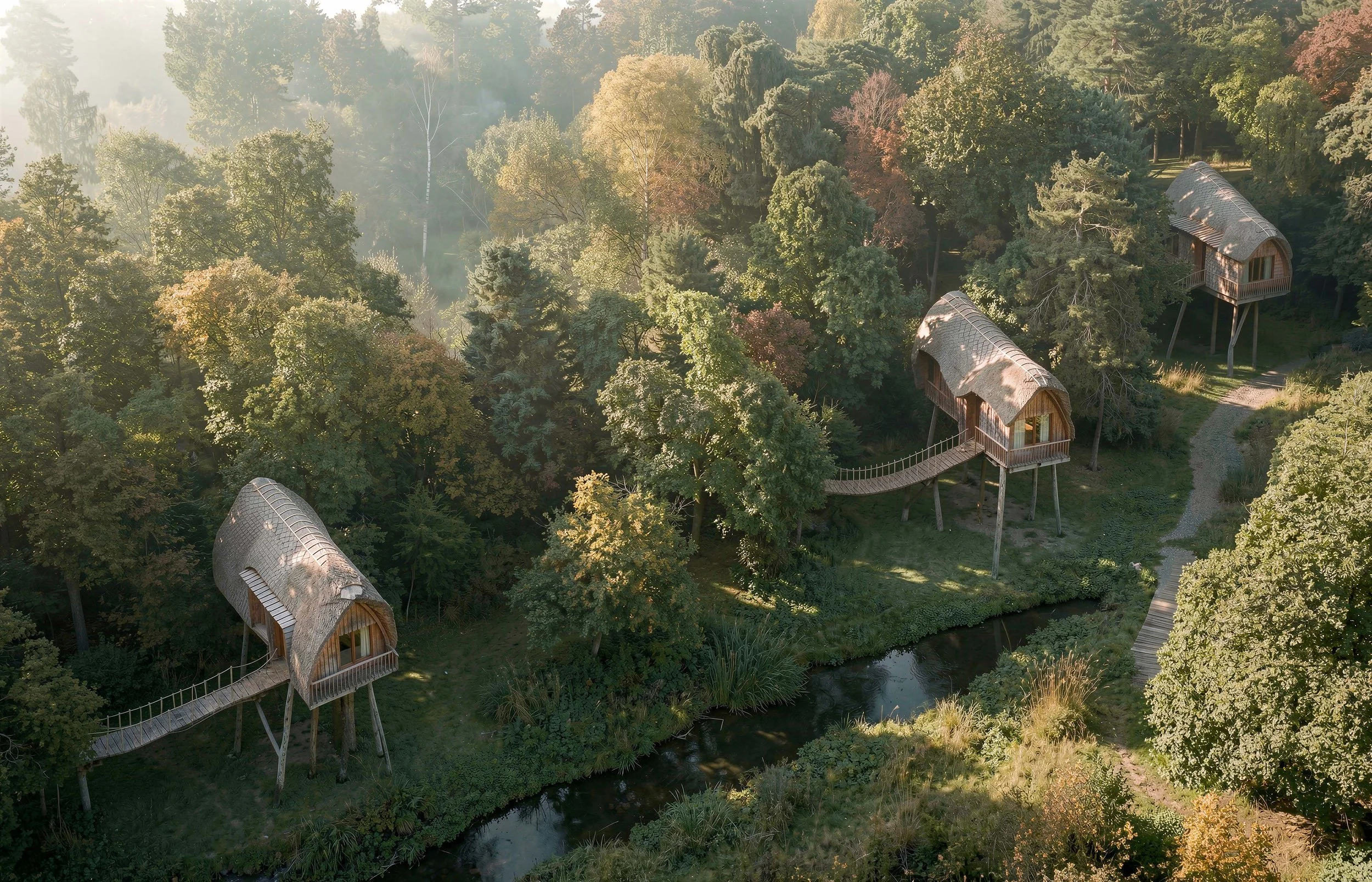
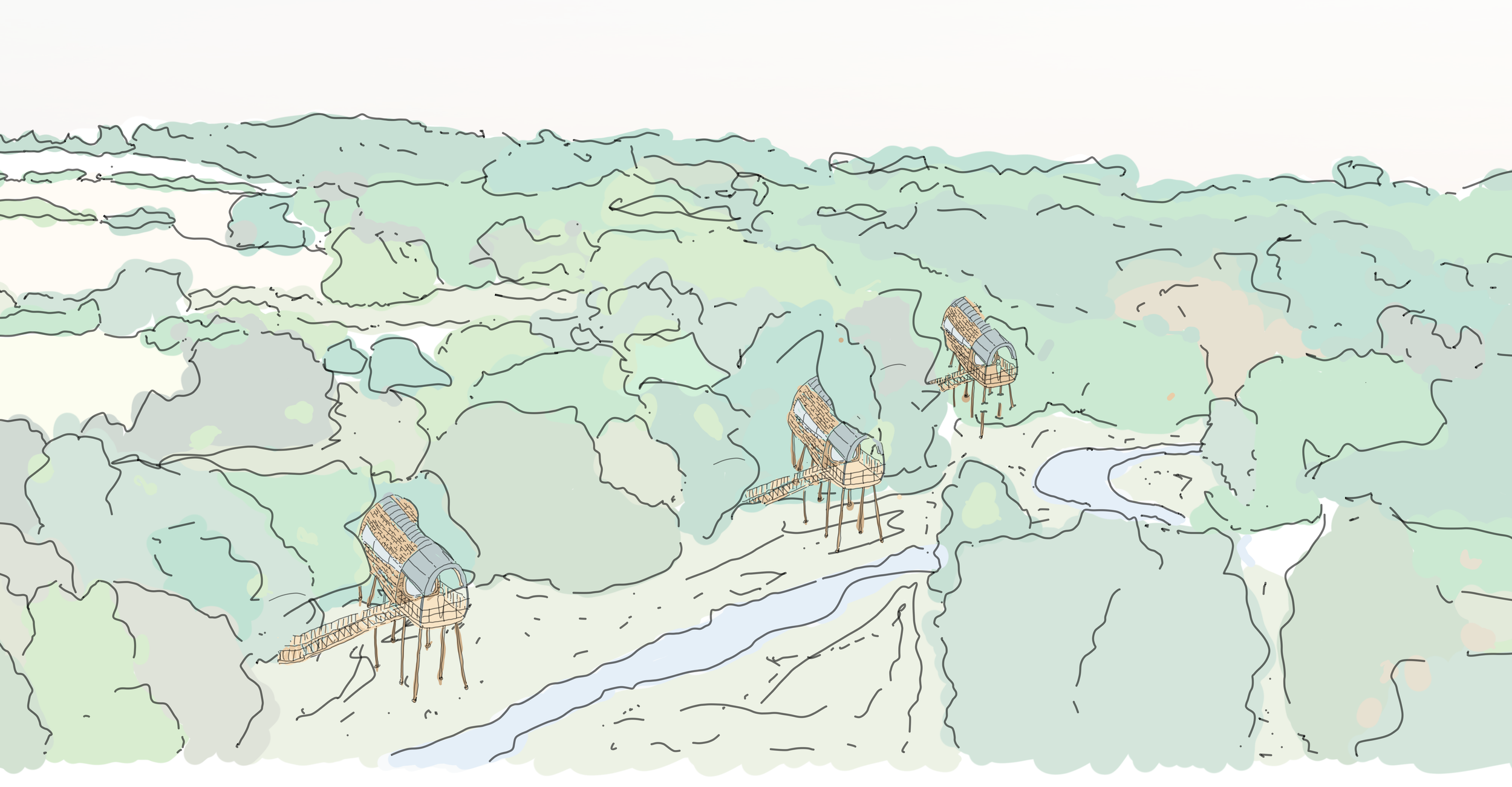
Canopy Cabins is an architect-designed treehouse retreat in Kidderminster, Worcestershire, set on a wooded strip of land between the Staffordshire and Worcestershire Canal and the River Stour. Three elevated cabins on reclaimed timber piles, linked by raised walkways, are designed to sleep two per unit.
The brief was to occupy a difficult, sensitive woodland site without disturbing it, and to turn that constraint into the architectural proposition.
RIBA Chartered and ARB registered architect-led from feasibility through planning. Currently in development.
What you can build on your land, you have been told, is unbuildable

How we were able to get Green Belt approval under Very Special Circumstances
Elevated, not built on the ground
The cabins sit on timber piles made from reclaimed trees, lifting the structures clear of the woodland floor. Elevating the structure from the ground was critical to make the design viable.
Building at ground level on a riparian woodland strip would require clearance, foundations, drainage runs and access tracks, every one of which damages the thing that makes the site valuable in the first place. Building elevated, on minimal point loads, leaves the woodland floor and the existing root systems substantially intact. The walkways thread between trees rather than around them. The cabins occupy the canopy, not the ground.
This is also a flood resilience move. The Stour corridor is a designated flood zone; an elevated structure on piles sits above the design flood level, removing the flood-zone planning objection, and reads as a natural response to the river edge rather than a fight with it.
A retreat read as one place, three rooms
The three cabins are designed as a single retreat across three structures, linked by raised timber walkways. Each cabin sleeps two and stands as a private unit; together they form a small woodland village that can be let as a whole or as individual rooms within a single guest experience.
The arrangement supports a range of operating models, exclusive-use bookings for groups of six, multi-party stays for friends or extended family, or individual cabin lets across three bookings. The walkways are part of the guest experience, not just the circulation.
Materials drawn from the site itself
Lightweight steel frame for structural efficiency. Reclaimed timber piles cut from trees on or near the site. Natural, reclaimed materials carried through to the interiors for a warm, grounded feel. Arched openings frame the woodland from inside the cabins, so the trees are the view from every bed.
The material strategy is circular and site-specific. Where trees have to be felled to make way for the cabins, those trees become the piles the cabins stand on. The architecture and the woodland are not separate stories.
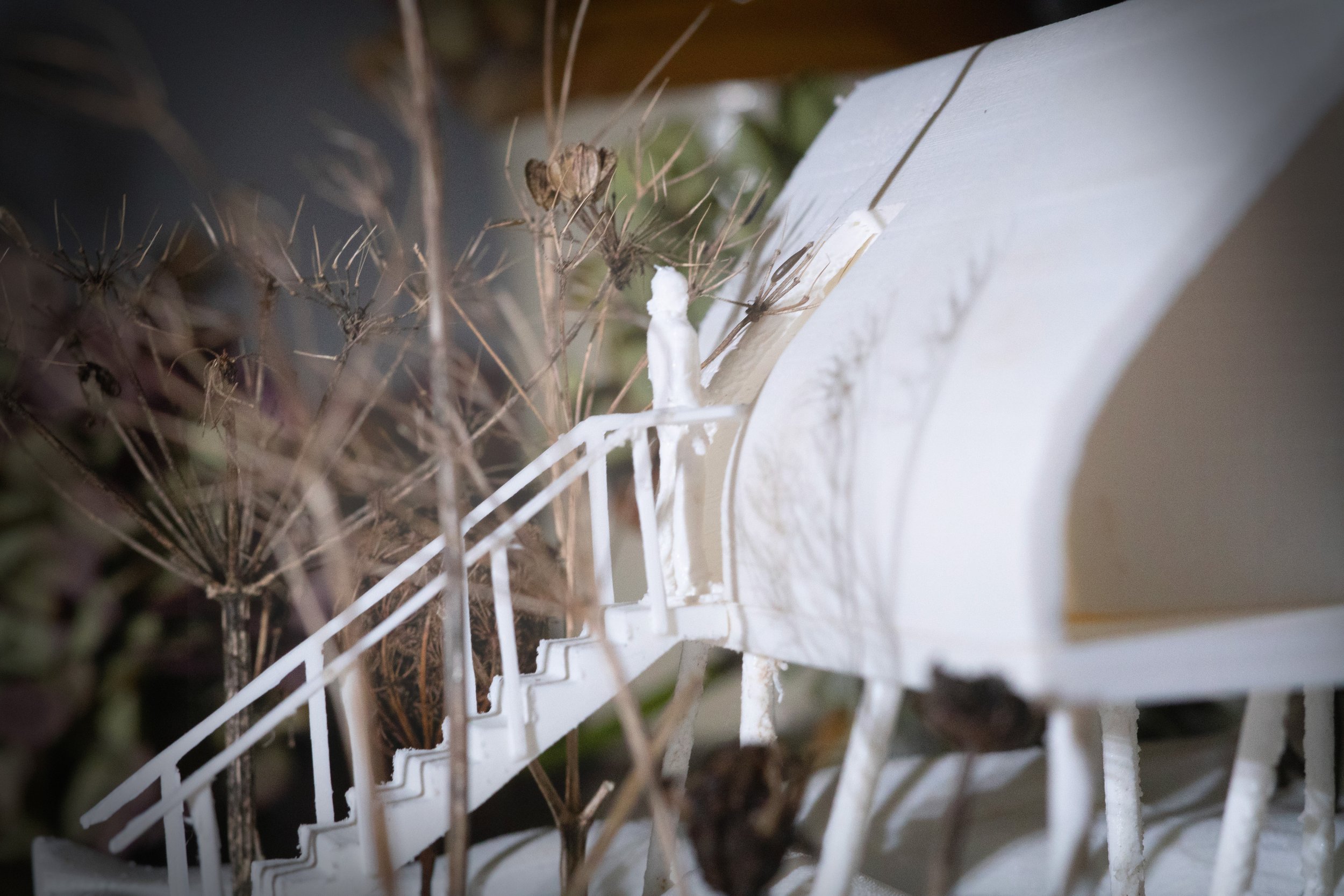
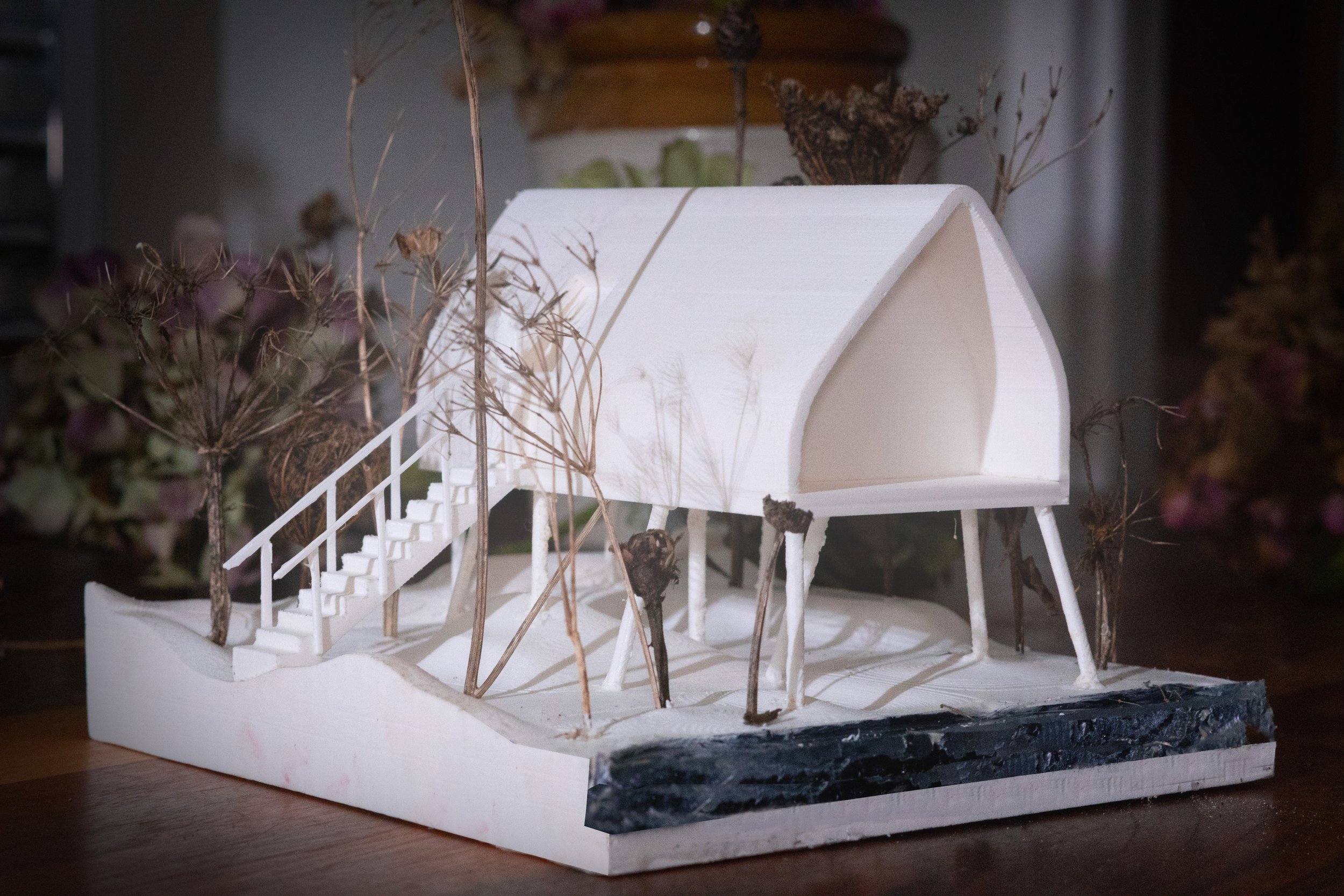
Designed with physical models and 3D printing
The project has been developed using physical models and 3D-printed prototypes in parallel with digital design. Modelling at scale reveals problems and opportunities a screen does not — sightlines between cabins, walkway gradients, and how the canopy actually frames each unit through the seasons.
This matters for client communication as much as for design refinement. A model lets a client stand over a site and read it; a render only lets them watch one. Both are part of how we work.
Planning strategy — a sensitive site between the canal and the river
The site is exactly the kind of constrained location where most cabin proposals fail at planning. Conservation Area along the canal, flood zone along the Stour, woodland with biodiversity value across the strip itself.
The proposal addresses each constraint directly. Elevated structures on minimal point loads protect the woodland floor and root systems, supported by an arboricultural assessment. Pile foundations and floor levels set above the design flood level resolve the flood-zone position. Materials, scale and form are read against the canal Conservation Area character appraisal, so the cabins sit within the corridor rather than against it. The use is sui generis short-term tourism, secured by planning conditions, in line with the rural tourism provisions of the NPPF and the Wyre Forest Local Plan.
The argument is straightforward. The site supports careful, low-impact tourism use of the kind national policy actively encourages, and the architectural response, elevated, light-touch, materials drawn from the woodland itself, is the most sensitive form that use can take.
A revenue model built around the constraint
The treehouse market is one of the highest-yielding niches in UK short-term rental. Architect-designed elevated cabins on a sensitive woodland site command nightly rates well above conventional self-catering, with strong year-round demand and a guest profile prepared to travel for the experience.
Three cabins on a single small site means one operator, one cleaning round, one set of utilities, and three letting units, operationally efficient compared to three separate sites. The retreat-scale layout supports both single-cabin bookings and exclusive-use bookings of the whole site, which broadens the revenue base across weekday, weekend and group markets.
This is the architect-and-operator perspective applied to a small commercial development. The brief, the layout, the linkage between cabins and the guest flow are decided with the operator's eye, not just the architect's.