Boutique Holiday Lets in the UK: Designing a Sustainable, Semi-Passive Income
We help landowners and homeowners build eco-homes, extend their homes, and create unique holiday homes that gain planning permission and pay them back. RIBA Chartered Architects.
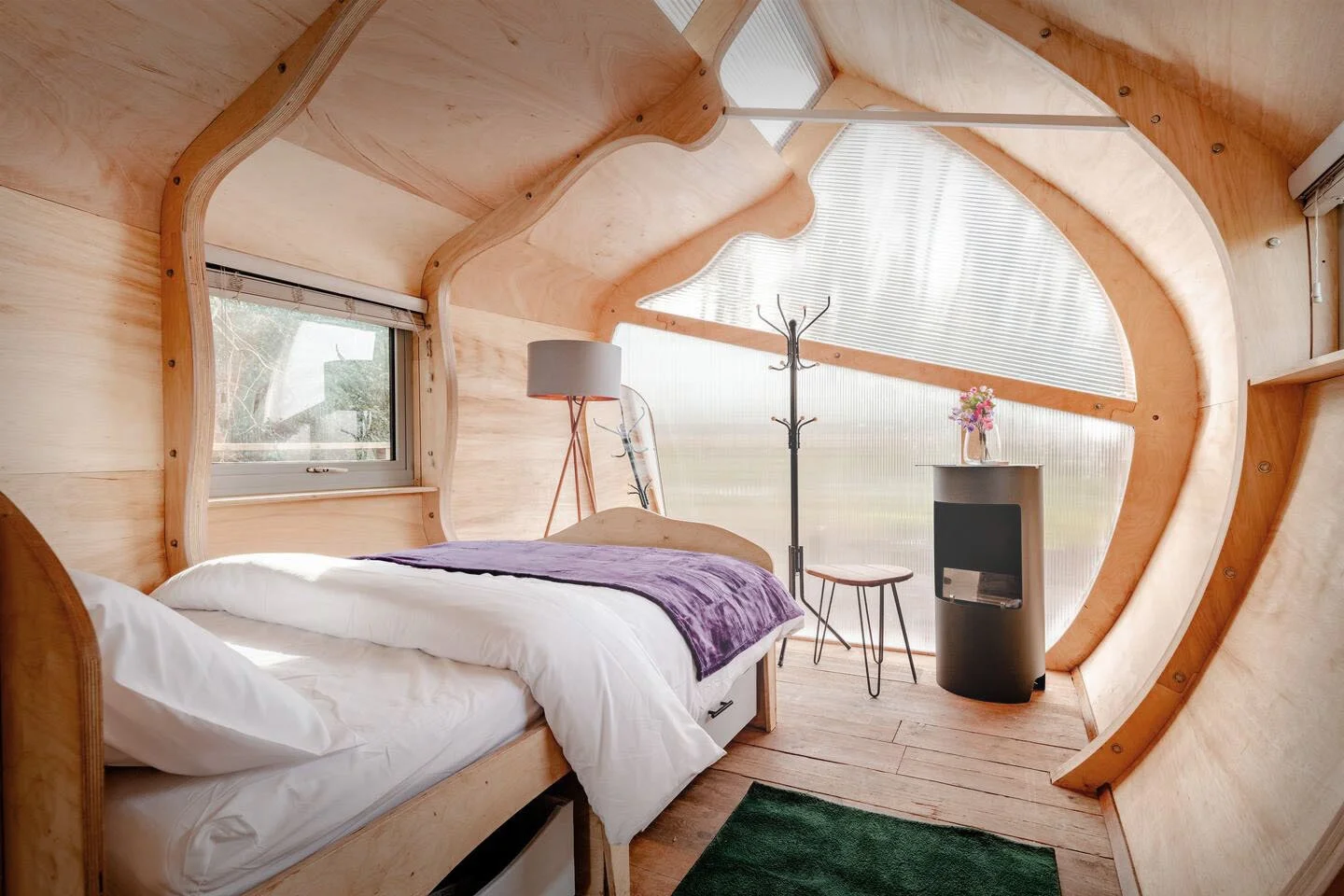
A carefully designed interior that prioritises comfort, daylight, and a sense of retreat, key factors in why unique holiday lets outperform more generic accommodation.
Introduction: Boutique Holiday Lets and Semi-Passive Income
A unique holiday home is a great way to make a semi-passive income, particularly if you have a home, estate, or farm with unused land.
I am reluctant to refer to holiday lets as “passive income”, as it’s not entirely passive, and I find this messaging to be somewhat misleading.
I write this from direct experience. Alongside my architectural practice, I run my own self-built boutique holiday let, and I’m involved in both the design and the realities of operating it as a business. You can read more about that work here: Monocoque Cabin.
This article explores the income-generating potential of boutique holiday lets in the UK, why unique and well-considered design consistently outperforms generic accommodation, and what landowners should realistically expect before committing time or capital.
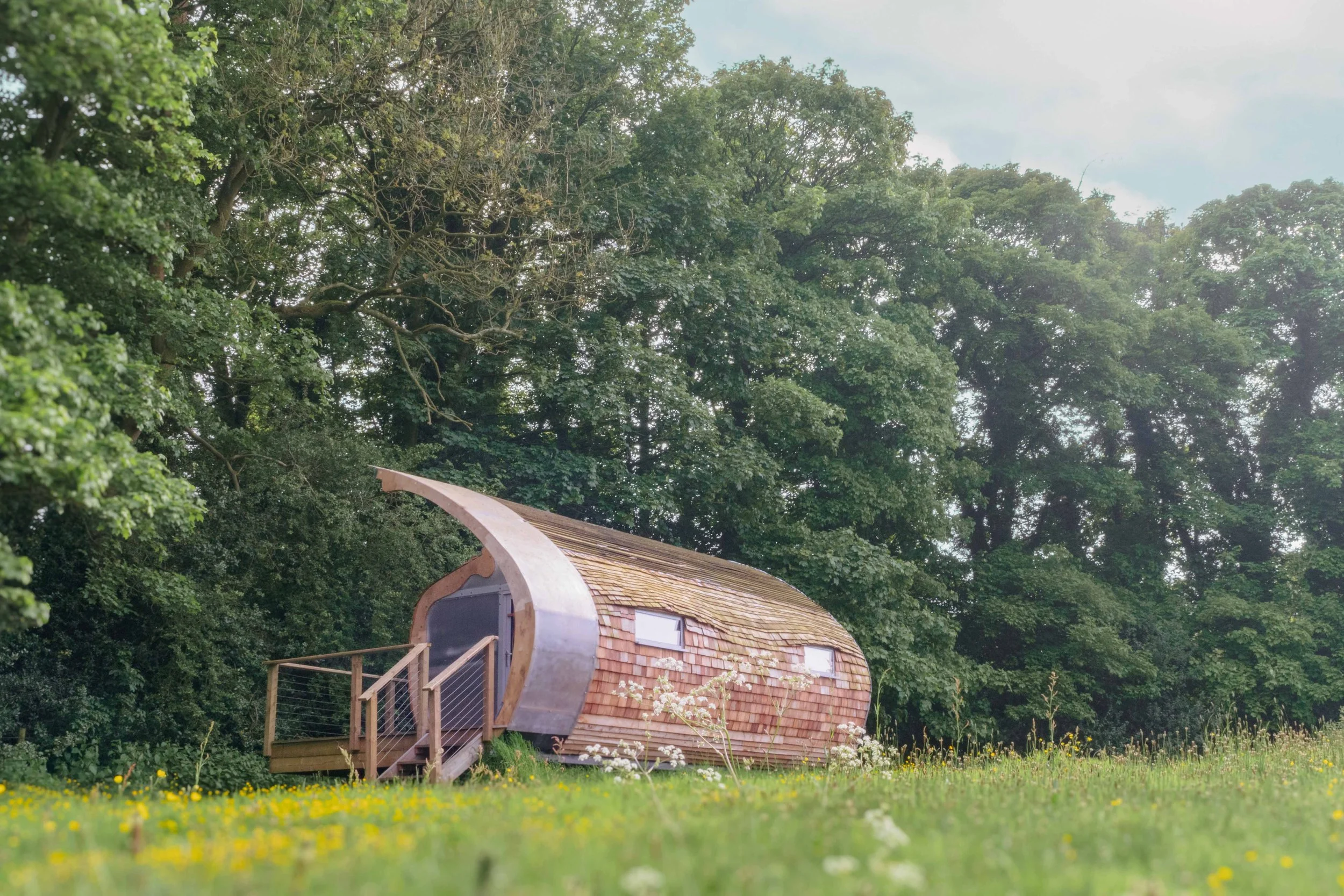
The Monocoque Cabin set lightly within its rural setting, demonstrating how a small, well-designed holiday let can generate strong income without overdeveloping the site.
Boutique Holiday Let Case Study – Monocoque Cabin
The Monocoque Cabin is a small, architect-designed holiday home that we designed, built, and now operate ourselves. It provides a useful real-world reference point for how boutique holiday lets perform when design and execution are taken seriously.
How Much Does It Rent For?
Monocoque Cabin: approximately £210 per night during peak summer periods
Comparable shepherd’s hut nearby: approximately £135 per night
Despite being in the same location, the difference in nightly rate reflects a broader pattern we see across the sector: unique design commands a premium.
Through media coverage, winning the Airbnb OMG Fund, and, most importantly, deliberate architectural differentiation, the Monocoque Cabin consistently achieves higher occupancy rates than more generic alternatives.
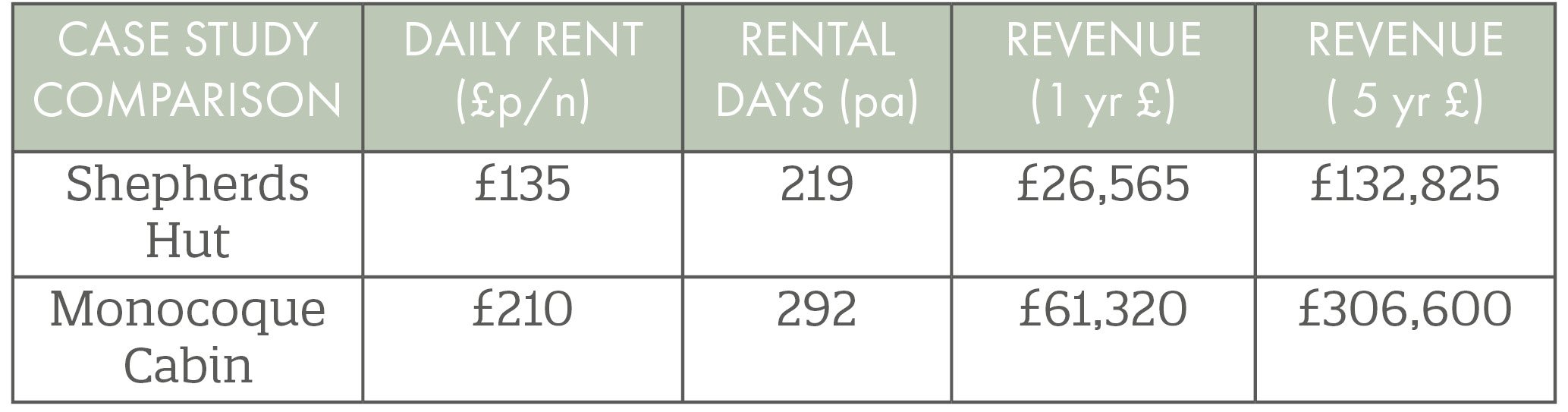
Comparison of rental performance between a standard shepherd’s hut and a design-led boutique holiday let over time.
Not sure what’s achievable on your rural plot? Download the free guide below, which sets out what’s realistically possible and where to start.
Boutique Holiday Lets & Rental Yield
For many rural landowners, the appeal of a unique holiday let is not just income, but income density: generating meaningful revenue from a relatively small footprint of land, without the need to fragment an estate or overdevelop a site.
Smaller, well-designed holiday homes often outperform larger, generic units because they:
photograph better
attract higher nightly rates
achieve stronger repeat bookings
integrate more discreetly into rural settings
This is where holiday let architecture becomes critical. Yield is not a function of size or build cost; it depends on experience, uniqueness, atmosphere, and how memorable the space feels to guests.

A typical rural setting where small-scale holiday lets can sit comfortably alongside existing land uses.
Construction Costs & Long-Term Value
There’s no denying that well-designed, well-built holiday homes often cost more upfront than generic, off-the-shelf solutions. However, higher quality does not have to mean bespoke or one-off. In practice, some of the most robust and cost-effective buildings are designed using Design for Manufacture and Assembly (DfMA) principles.
DfMA shifts the focus from improvisation on site to careful thinking upfront: how a building is broken down into repeatable components, how those components are fabricated, and how they are efficiently assembled. When done properly, this approach reduces waste, improves build consistency, and removes many of the variables that typically lead to cost overruns or long-term defects.
A useful reference here is the so-called “boots theory”: buying cheaply often means buying twice. Poor detailing, short material lifespans, and compromised thermal performance can quickly erode margins through maintenance, repairs, and lost bookings.
During the construction of the Monocoque Cabin, we worked directly with skilled subcontractors to deliver a carefully developed, repeatable system, rather than a one-off solution. Because the design had been properly resolved in advance, it allowed efficiencies during construction while still achieving a robust, energy-efficient building that performs reliably in use.
For landowners considering sustainable holiday lets that are intended to last, this approach is critical. A durable, efficient, and repeatable building will generally cost less to run, be easier to maintain, and attract guests who value quality, helping the asset hold its value over time, both commercially and architecturally.
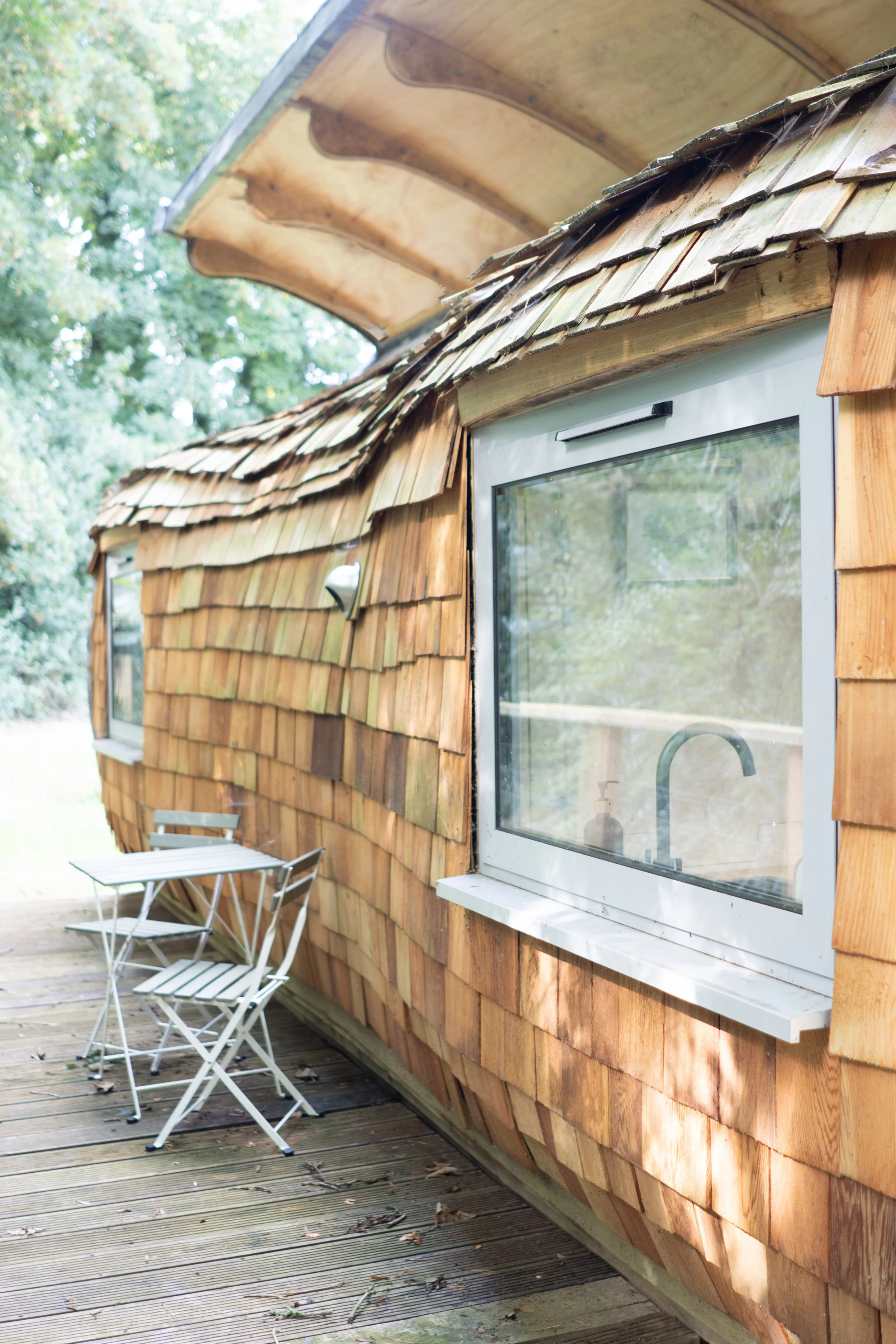
Durable materials and careful detailing designed to weather naturally and reduce long-term maintenance.
Conclusion - Holiday Let Done Properly
Boutique holiday lets aren’t about quick wins. They work best when they’re approached as a long-term asset, carefully designed, well built, and set up to perform reliably over time.
Successful projects tend to get the early decisions right: understanding the site, choosing the right planning route, designing something guests genuinely want to stay in, and building it in a way that lasts.
If this way of thinking feels aligned with what you’re trying to do, you’re welcome to book a free 20-minute Project Plan meeting to talk through your site and options.
And if you’d like to experience one of our buildings first-hand, you can also stay at the Monocoque Cabin.
Related reading: How much does a luxury Airbnb cabin cost? and Luxury cabin vs pod: which earns more?.