Luxury Treehouse Design | Eco-Focused Treehouse Architect UK
We help landowners and homeowners build eco-homes, extend their homes, and create unique holiday homes that gain planning permission and pay them back. RIBA Chartered Architects.
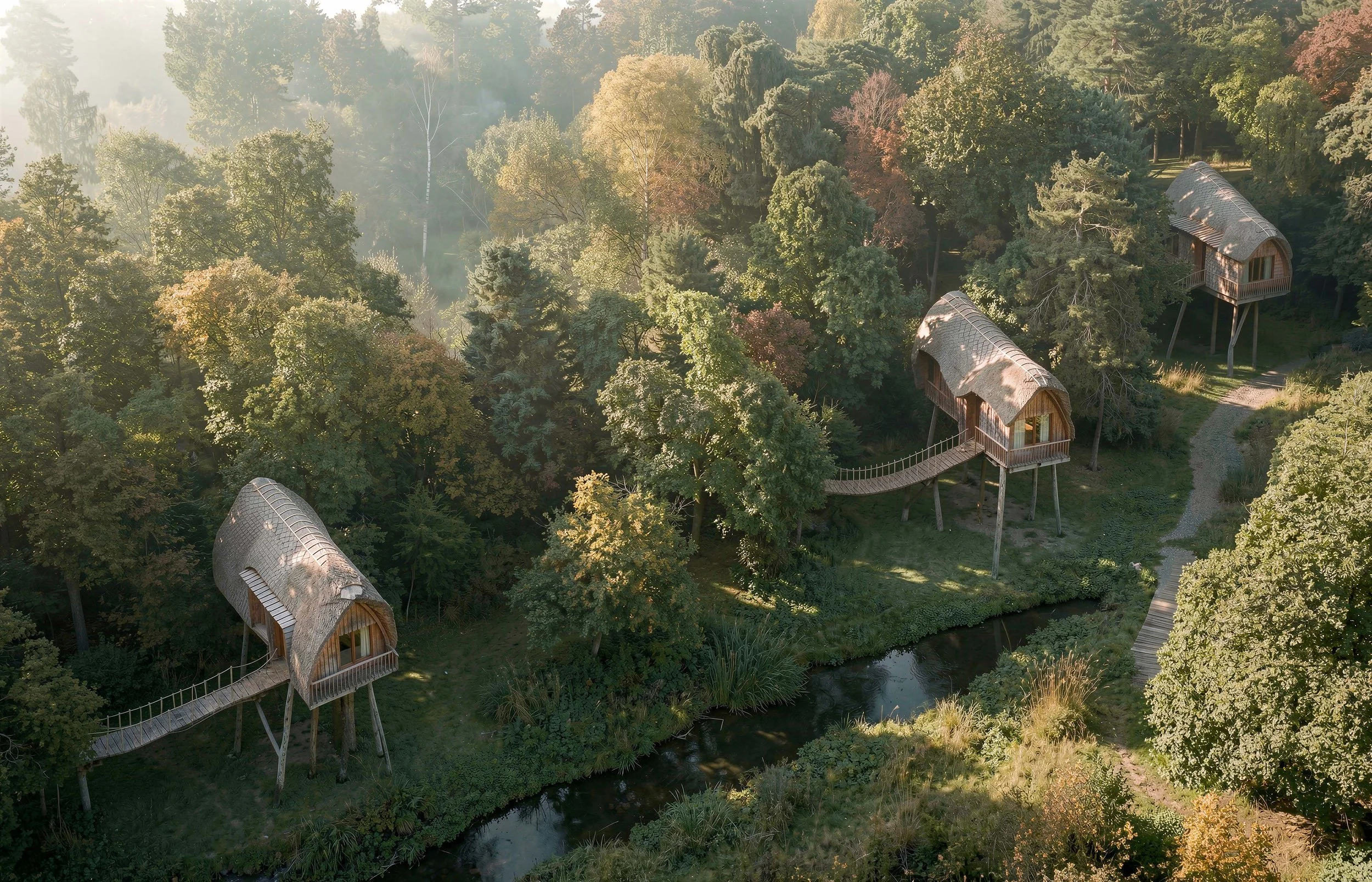
A series of bespoke timber treehouses elevated above a woodland riverbank, carefully positioned to minimise ground impact while offering secluded views through the forest canopy. The design demonstrates how sensitive treehouse architecture can sit lightly within a natural landscape while creating a distinctive luxury holiday retreat.
Treehouses Designed as Destinations
Well-designed treehouses have a rare ability to spark a sense of wonder. They recall childhood, slow people down, and reconnect guests with nature in a way few buildings can. This emotional pull is precisely what makes them so compelling as places to stay.
As luxury holiday lets, treehouses also perform exceptionally well. Distinctive architecture encourages guests to actively seek them out, supports higher nightly rates, and drives repeat bookings year after year. In a competitive short-stay market, uniqueness is often the strongest commercial advantage.
This bespoke woodland treehouse, designed by a UK treehouse architect for a rural riverbank setting, demonstrates how thoughtful, low-impact architecture can transform a simple idea into a commercially viable retreat with lasting appeal. The treehouse was designed as a destination in its own right, with careful attention paid to how it feels to stay in, how it sits within the landscape, and how it performs over time.
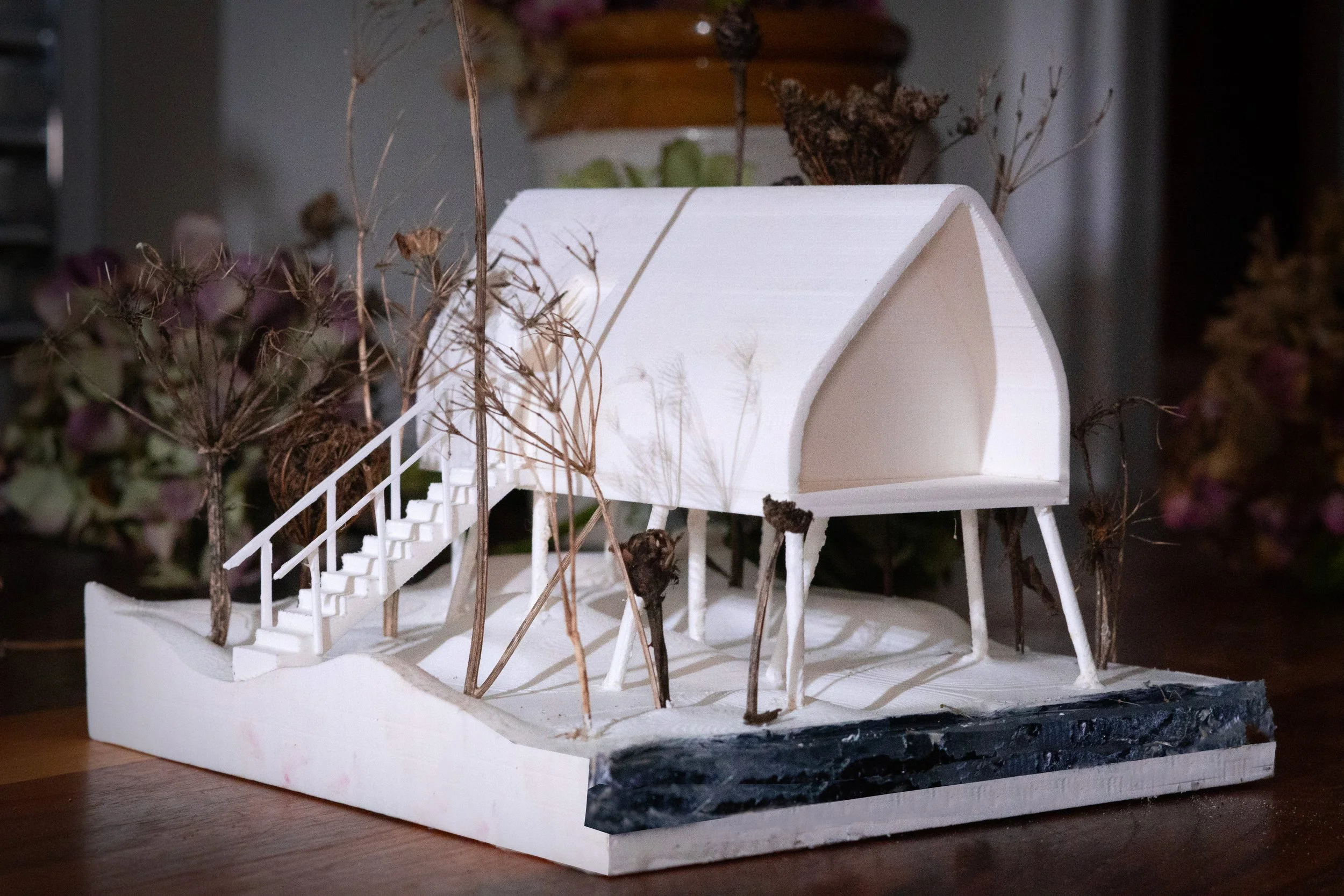
Early-stage 3D-printed physical concept model exploring the form, structure, and relationship between the treehouse, the woodland setting, and the riverbank below. The model was used to test scale, elevation, and how the treehouse sits lightly within the landscape.
Designing a Treehouse That Belongs to Its Landscape
The design draws on the same structural thinking developed through our Monocoque Cabins. A lightweight steel frame is supported on timber piles formed from reclaimed trees, allowing the treehouse to sit lightly within the woodland without disturbing root systems or altering the natural ground conditions.
Material choices follow the same logic. Natural timber and warm, tactile finishes are used throughout to create an interior that feels calm and rooted in its setting.
Inside, a full-height arched window frames views through the tree canopy towards the river beyond. It creates a strong connection to the landscape and gives the treehouse its sense of place, the kind of spatial moment guests tend to remember long after they leave.
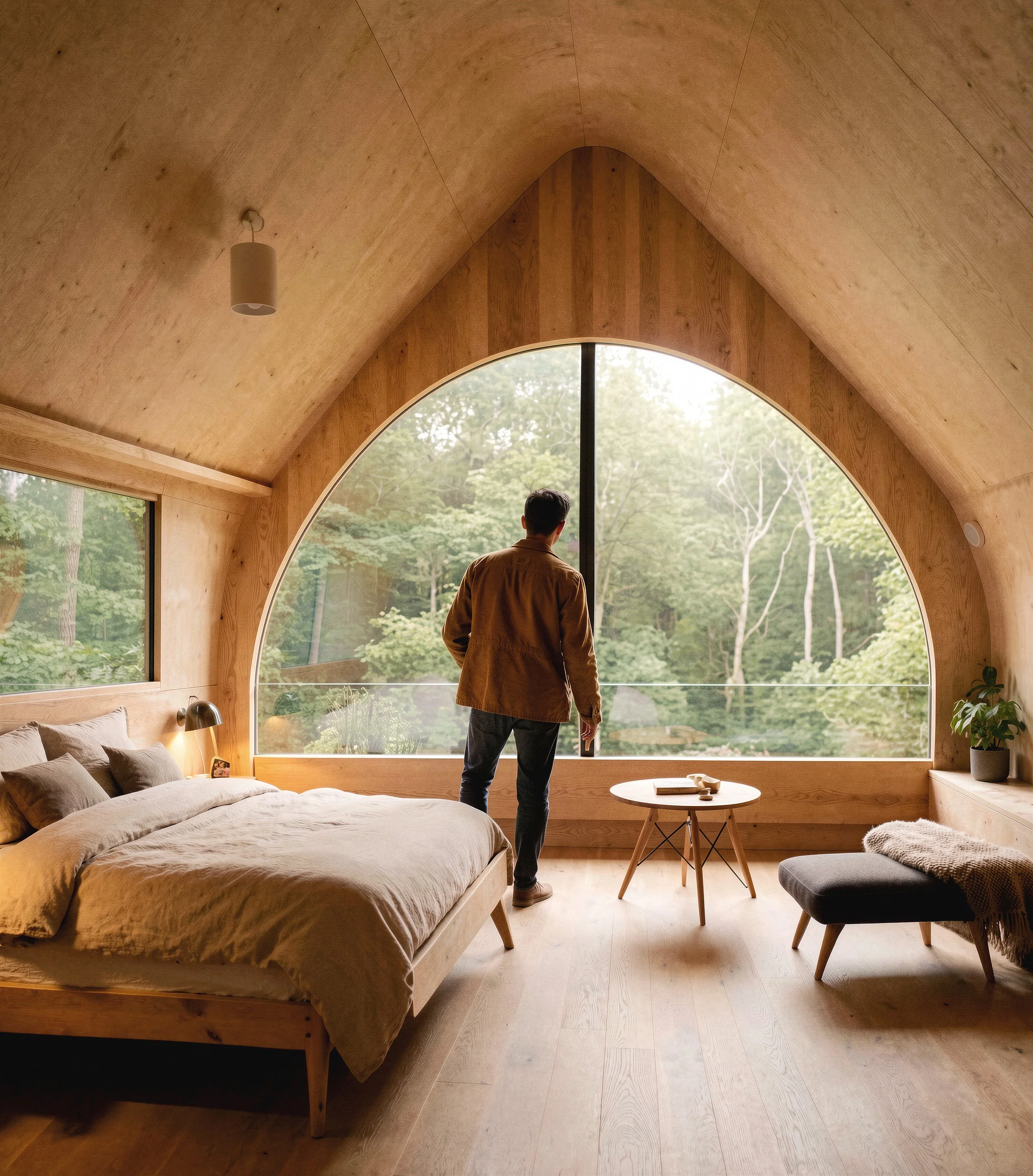
Interior view of the treehouse bedroom, where a full-height arched window frames the surrounding woodland and river beyond. The space is designed to feel calm and immersive, using natural materials and carefully controlled views to strengthen the connection between the interior and its setting.
If you are considering a unique project, such as a Tree House on your land, you can download our free eBook to learn about what is possible on your land.
Why Treehouses Outperform Traditional Holiday Lets
In my experience, a well-designed treehouse offers something most accommodations can’t: a real sense of escape.
Being lifted into the canopy changes how a place feels. The light is softer, the views open out, and there’s a level of quiet and separation from the ground that’s hard to achieve in more conventional buildings. That difference matters, and it’s why treehouses consistently outperform shepherd huts, pods, and standard cabins in terms of bookings.
Guests book Treehouses for the experience, the feeling of retreat, the connection to the landscape, and the sense that they’re staying somewhere genuinely different. Those are the qualities that lead to stronger word-of-mouth, repeat bookings, and the ability to sustain higher nightly rates.
From an investment point of view, one well-designed treehouse will often outperform several more generic units. When a building is thoughtful and rooted in its setting, it becomes memorable, and memorable places are the ones that stay booked.
Planning a Treehouse in the UK: What You Need to Know
Treehouses sit in an interesting space within the UK planning system. Local authorities are often supportive, particularly where proposals form part of rural tourism or farm diversification, but woodland and riverside sites come with constraints that need to be handled carefully from the outset.
Key considerations usually relate less to the building itself and more to its relationship with the site. Protecting tree root zones is critical, which is why no-dig or piled foundations are commonly required. Woodland locations also tend to trigger ecological surveys, particularly for bats, birds, and protected habitats, and these need to be factored into both programme and cost.
Where treehouses are close to water, issues such as flood risk, finished floor levels, access, and structural resilience become important. Visual impact is another common concern, and sensitive siting, modest scale, and the use of natural materials can make a significant difference in how a proposal is received. Practical matters, including construction access, guest access, and discreet servicing for water, power, and waste, also need to be resolved early.
Looking ahead, it is increasingly likely that treehouses used as holiday accommodation will fall under the C5 Planning application class in England, particularly in areas where councils choose to exercise additional controls. For this reason, a full planning application should generally be expected.
Building Lightly: Structure, Craft and Practicality
The construction approach for this treehouse is deliberately gentle.
Timber piles from reclaimed wood create minimal ground disturbance
A lightweight steel superstructure allows for efficient spans and clean interior volumes
Monocoque principles provide rigidity with less material
Off-site fabrication, where possible, reduces disruption to the woodland
Physical models were used to test approaches to height, access, views and the relationship between the building and surrounding trees. These early studies help ensure the final structure feels integrated with the surrounding landscape.
Guest Experience: Why Design Drives Profit
A successful treehouse doesn’t rely on gimmicks. It’s about a few simple things done well: calm, well-proportioned spaces; morning light filtering through the canopy; a carefully framed view of the river; and warm timber interiors that make evenings feel comfortable and relaxed.
Being elevated changes how guests experience the landscape. There’s a sense of separation and quiet that’s hard to replicate at ground level, without sacrificing comfort or practicality. When the design gets this balance right, guests remember how the place felt, not just how it looked.
That experience is what drives strong reviews, repeat bookings, and the ability to sustain premium nightly rates. In short, good design isn’t an added extra, it’s fundamental to commercial performance.
FAQ: What Landowners Usually Ask Us
How much does a bespoke treehouse cost to build?
Costs vary depending on height, access, engineering complexity, and level of finish, but a realistic range is typically £120,000–£250,000+. Early feasibility work is key to understanding where a project is likely to sit within that range.
Do treehouses need planning permission?
Yes. Treehouses generally require planning permission, particularly in woodland settings or near rivers. If the building is intended as a holiday let, it will not fall under permitted development.
Can a treehouse really generate high income?
Yes, when it’s well designed and well-built. Treehouses consistently outperform more generic accommodations because they offer a distinctive experience that guests actively seek out.
What if my site is sloped, remote, or awkward?
These constraints often make treehouses more interesting rather than less viable. With the right structural and access strategy, challenging sites can become a real asset rather than a limitation.
Conclusion: Make Your Property a Destination, Not Just a Place to Stay
A well-designed treehouse can transform a piece of land into somewhere people go out of their way to visit. When it sits lightly within the woodland and frames the landscape around it, it becomes more than accommodation. It becomes a small retreat, somewhere guests talk about, return to, and are happy to pay a premium for.