Self-Build Eco Homes: Costs, Build Routes, Materials & Expert Advice
We design carefully considered eco homes and luxury holiday homes that perform well, age gracefully, and make long-term financial sense. RIBA Chartered Architects.
What Self-Build Really Means (And What It Doesn’t)
In the UK, self-build does not necessarily mean physically building your own home; this is often misunderstood.
More accurately, it means taking responsibility for the project, rather than buying a finished, off-the-peg product from a builder or developer. You are commissioning a building, not purchasing one.
That distinction matters because it fundamentally changes where risk, cost and control sit from day one.
This guide is intended to clarify those decisions early, before assumptions become expensive. It focuses on the factors that most directly influence outcomes: cost, complexity, materials, and build strategy, and links to more detailed articles where a deeper explanation is useful. It is written primarily for those considering their first self-build project, and who want a clear, realistic understanding of what is involved before committing.
Taken together, the aim is to provide a clear, realistic overview of what self-building an eco home actually involves, and where your decision will have the greatest impact.

Installing oak cladding during a self-build project showcases a hands-on approach that highlights how natural materials can bring character and craftsmanship to an eco-home, which is otherwise difficult to achieve in more synthetic materials.
The Three Common Self-Build Routes
Most self-build projects fall into one of three broad routes:
DIY-led builds
Highly hands-on, with the client carrying significant responsibility and risk. Typically only suitable for smaller or simpler projects or for those with prior experience.Contractor-led builds
A main contractor delivers the construction while you retain control of design and specification. This reduces day-to-day involvement but limits flexibility once work is underway.Hybrid builds
A structured mix of self-managed elements and specialist contractors. This is the most common route for eco homes, where sequencing, detailing and coordination are critical.
There is no single “best” route; instead, the route that aligns with your experience, appetite for risk, and the complexity of the project is the most suitable. If you would like to understand more about the stages involved in a project, this is often referred to as the RIBA Plan of Works. You can click the link to find out more.
What Self-Build Is Not
Self-build is not:
A guaranteed way to save money
A shortcut around construction complexity
A substitute for professional input
A casual or easy process
Even highly hands-on self-builders rely heavily on contractors, engineers and suppliers to meet Building Regulations, manage structure, and avoid costly mistakes.

Carpenter installing natural building materials inside a timber-framed eco-home during a self-build project.
Call with Peter the Architect
Book Your Free 20-Minute Self-Build Planning Call
If you're considering a self-build, then it is likely you will need help from an Architect. A short call can help clarify your route forward. We can look at:
The best self-build approach for your budget and experience
Material options and sustainable construction methods
Key planning considerations for your site
How to manage scale, complexity and risk on a first-time build
If you’d like practical guidance before moving ahead, you’re welcome to book a free consultation or email me at peter@markosdesignworkshop.com
How Much Does a Self-Build Eco Home Cost in the UK?
There is no single, reliable cost per square metre for a self-build eco home. Overall costs are highly sensitive to early design decisions, material specification and the chosen construction approach.
In practice, a small number of factors determine the majority of the budget, most of which are fixed before construction begins. For a more detailed breakdown, you can read our full article: Eco-Home: How Much Will it Cost?
What Actually Drives Cost on a Self-Build Eco Home
In practice, the largest cost drivers are:
Scale and volume
Often, self-builds are designed to be larger than what is practically required in terms of space; this can become an unnecessary cost. How to Reduce Home Extension Costs: How Smarter Spatial Design Saved One Client £31,000Structural strategy
Simple forms and clear load paths are significantly more economical than intricate structures.Ground conditions and access
These can have a greater impact on cost than material choices.Build route and sequencing
Poorly sequenced projects almost always cost more, regardless of specification. See Your Eco-Home Before It’s Built: Why Physical Models Still MatterLevel of detailing
Bespoke elements, junctions and finishes accumulate cost quickly.
Are Eco Homes More Expensive to Build?
Not necessarily, Eco homes can cost more upfront, where they rely on higher-performance envelopes, natural materials, or bespoke detailing. However, these costs are often offset by:
Reduced running costs
Improved comfort and durability
Longer material lifespans
Fewer remedial works over time
What I would say is critical, particularly if you are looking to make the self-build a forever home, is that it should be designed to age gracefully over time. All too often, we see people choose cheaper materials that do not age well and require remediation after only a few years. I have also written this piece on Choosing Long‑Lasting Materials for Your Eco-Home.
Why Early Design Decisions Matter More Than Budget
A common mistake for self-builders I see is attempting to “design to a budget” too late.
By the time a scheme reaches planning or technical design, many of the most influential cost decisions, footprint, structure, form and construction logic have already been fixed, and “value engineering” the structure is not effective.
At that point, savings are often forced through finishes or performance, rather than through intelligent design.
This is why early architectural input is less about appearance and more about cost control and risk management.
A More Useful Way to Think About Cost
Rather than asking “How much does an eco home cost?”, a more productive question is:
“What decisions will have the greatest impact on cost, and when do they need to be made?”
Self-build eco homes that stay on budget are rarely those with the lowest specification. They are those where scale, structure and sequencing have been carefully thought through from the start.
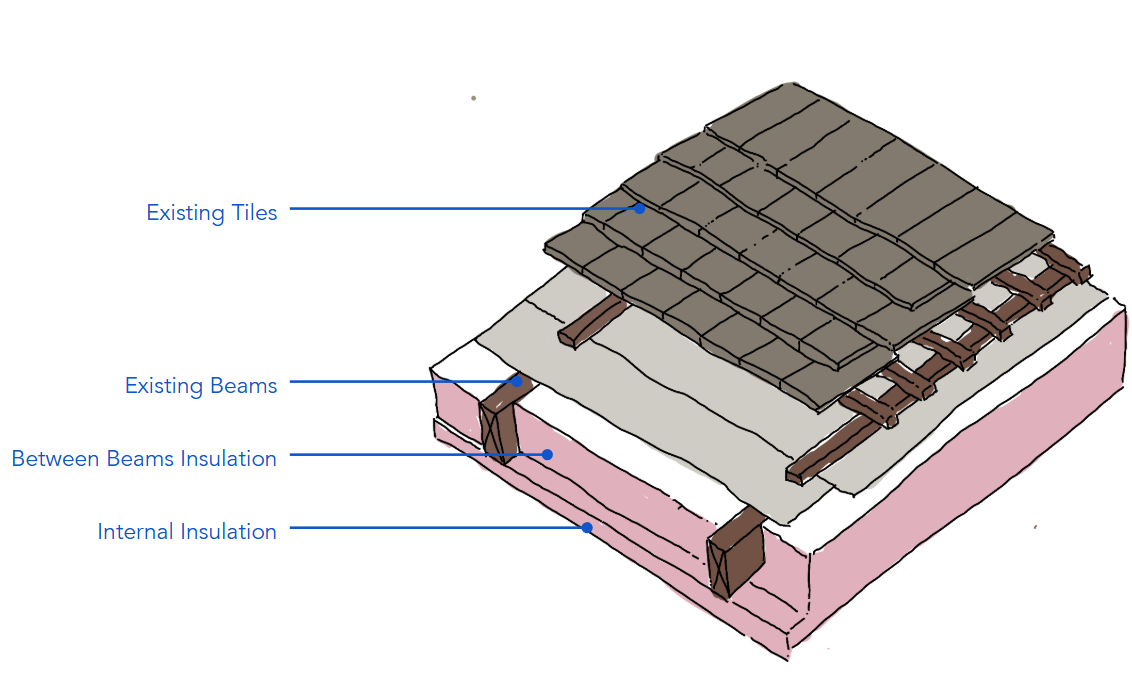
Early design decisions allowed us to reuse existing roof tiles and timber structure, upgrading insulation performance while retaining much of the original fabric. This approach reduced material costs, minimised waste, and helped the project meet the client’s cost and sustainability targets.
2. Choosing Materials for a Long-Life Eco Home
The main concern with materials should be about how they perform over time, how they are detailed, and how easily they can be repaired or replaced, which will be required over time.
Materials, therefore, need to be selected as part of the overall building system and not in isolation.
Natural Materials: When They Work Well — and When They Don’t
When choosing materials, you should look to prioritise: performance, durability, and how materials are detailed over time. For more information on materials, you can read our full-article: Top 5 eco-friendly building materials.
Natural Materials: Use with Care
Natural materials such as timber, lime-based finishes and natural insulation can work extremely well when detailed correctly. They tend to regulate moisture throughout the home more effectively and age far better as faux materials are much more prone to cracking, damaging and looking worse over time.
However, natural materials are less forgiving of poor detailing and workmanship. Used without care, they can create problems that are difficult and expensive to correct.
Durable Materials
Some of the most sustainable buildings are those that do not require early replacement or remedial work.
Short-life materials often undermine otherwise well-intentioned projects. By contrast, materials chosen for longevity tend to justify higher upfront costs through reduced maintenance and longer service life.
Materials Don’t Fix Poor Design
Materials are rarely the place to rescue a poorly resolved scheme. Over-complex forms, inefficient layouts and unclear structural logic cannot be solved by upgrading finishes late in the process.
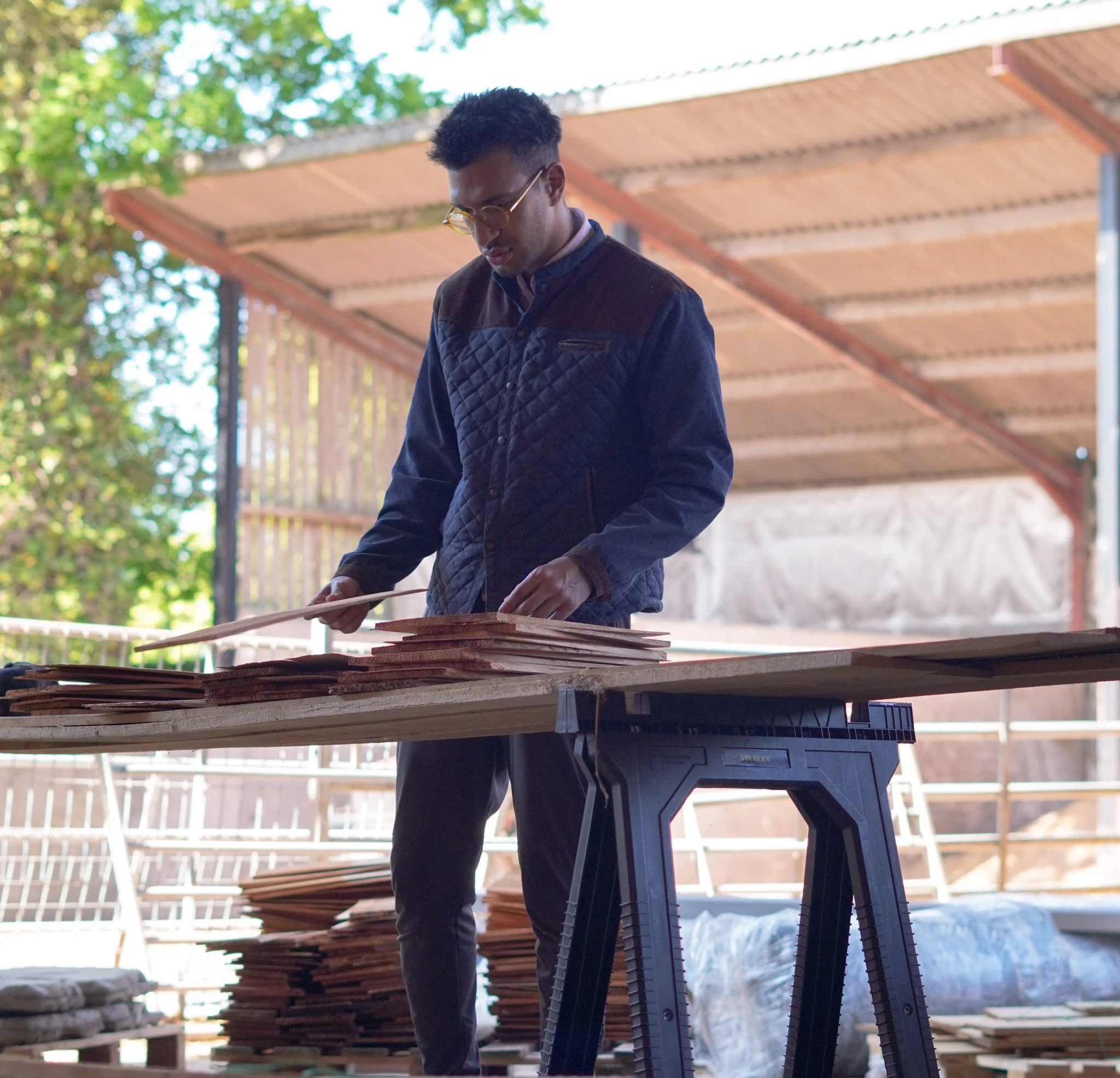
Peter on site inspecting Grade 1 cedar shingles following delivery. Material quality and specification are assessed early, ensuring finishes align with the wider design intent rather than being used to compensate for unresolved design decisions.
3. When Does a Self-Build Eco Home Make Sense?
They tend to make most sense when the intention is long-term occupation, where comfort, energy performance and durability are valued alongside initial build cost. In these circumstances, higher upfront investment is often justified by predictable running costs, material longevity and reduced need for remedial work.
The value of a self-build eco home is rarely found in individual technologies or products. It comes from how the building performs holistically, structurally, thermally and spatially.
In practice, the most successful self-build eco homes are those where sustainability is treated as a design and delivery strategy.
4. Choosing the Right Site for Your Eco-Home
In many cases, the characteristics of the site will have a greater impact on cost, performance and planning risk than any single design decision.
Before considering layouts or materials, it is important to understand what the site can realistically support. If you have not yet secured a site, you may find it useful to read our separate guide on how to approach site acquisition. How to Choose the Best Site for Your Eco-Home: Architect Advice for Self-Builders.
I regularly hear from prospective clients who have purchased land at an attractive price, only to discover later that the site is unlikely to secure planning permission. For this reason, it is important to establish whether a site has a realistic prospect of approval before committing to a purchase.
Orientation, Topography and Access
Basic site characteristics often determine how efficiently an eco home can perform.
Key considerations include:
Orientation and access to daylight
Topography and ground conditions
Vehicular access for construction and future use
Sites that work with their natural conditions tend to be simpler, more economical and easier to build. Sites that fight them usually require greater structural input and higher construction costs.
Planning Context Matters Early
Planning constraints should be understood before committing to a site.
Green Belt, countryside locations, conservation areas and local planning policies can all significantly influence what is achievable. An “eco approach” will not override planning policy, and in some cases can complicate it if not handled carefully.
Services and Infrastructure
The availability of services is often underestimated. Access to power, water and drainage, or the lack of it, can have a significant impact on both cost and build strategy. In some cases, connecting to the National Grid can run into the tens or even hundreds of thousands of pounds if the site is remote. Off-grid or semi-off-grid solutions can work well, but only when they are planned deliberately.
Site Constraints Should Shape the Final Home
A common mistake is purchasing a site with a fixed idea of the building already in mind.
In practice, the most successful self-builds are those where the design emerges from a clear understanding of the site’s constraints and opportunities. This usually leads to simpler forms, more efficient layouts and better long-term performance.
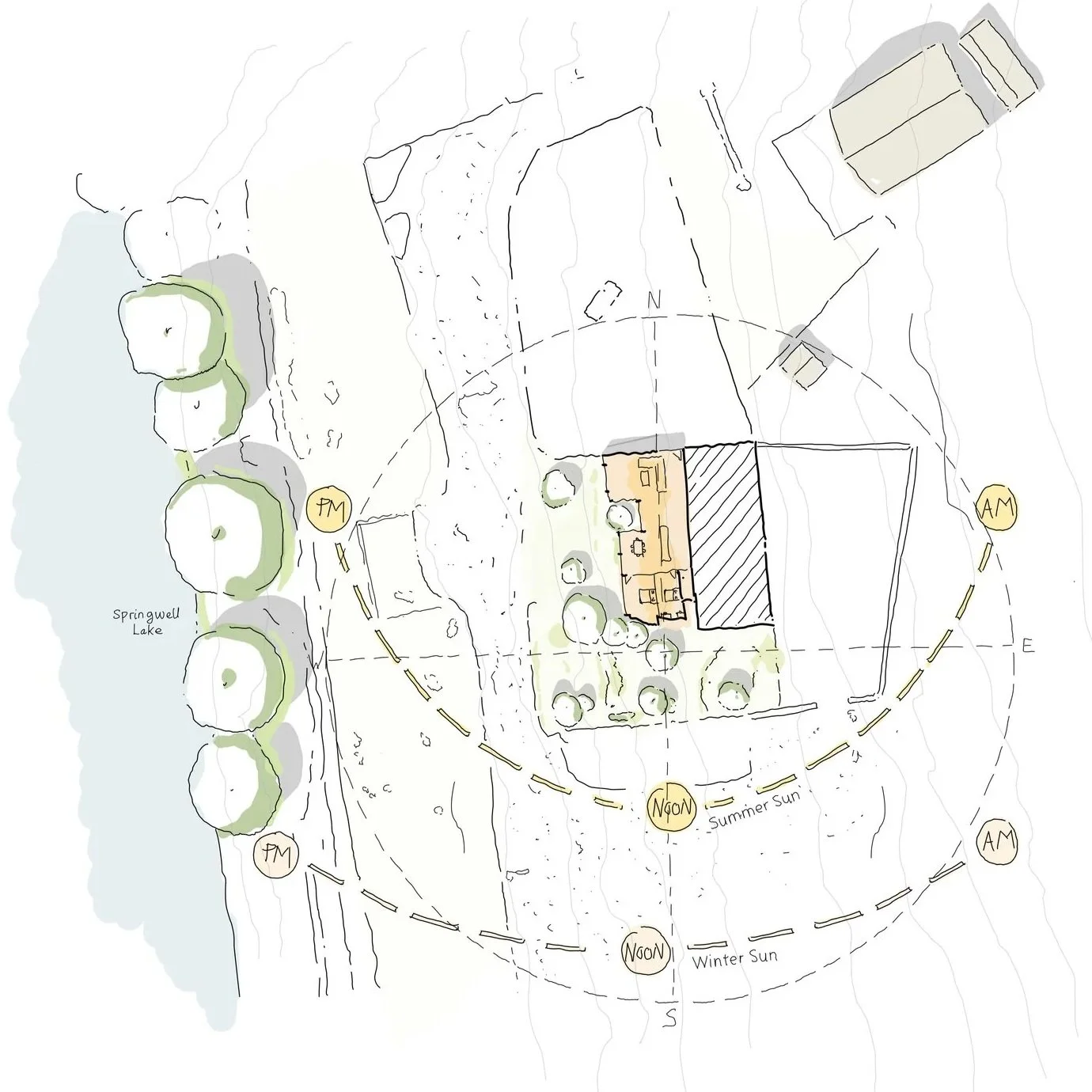
This project required a careful response to contrasting site conditions. While the lake to the west presented a clear opportunity in terms of outlook and orientation, the brownfield land to the east introduced constraints that shaped both the form and placement of the building. The resulting design emerged directly from these conditions, responding to the site rather than imposing a generic solution.
Conclusion
If you have reached this point and are keen to get started with your eco home, you can book a free initial call with Peter Markos, RIBA Chartered Architect, using the link below.
Most projects begin with an initial pre-design report, which tests the key issues outlined in this article, including cost, planning context, site conditions, and building positioning. This early work is an effective way to de-risk a project, allowing design intent and likely outcomes to be explored before committing to detailed design or planning.
In many cases, these pre-design reports have also been used to support funding discussions, particularly for projects on existing land.